Loading…
Notes from building agents.
What actually breaks when an agent meets real customers, real orders, and a real invoice. Written from the code in the catalog.
 Latest
OutboundOct 20267 min read
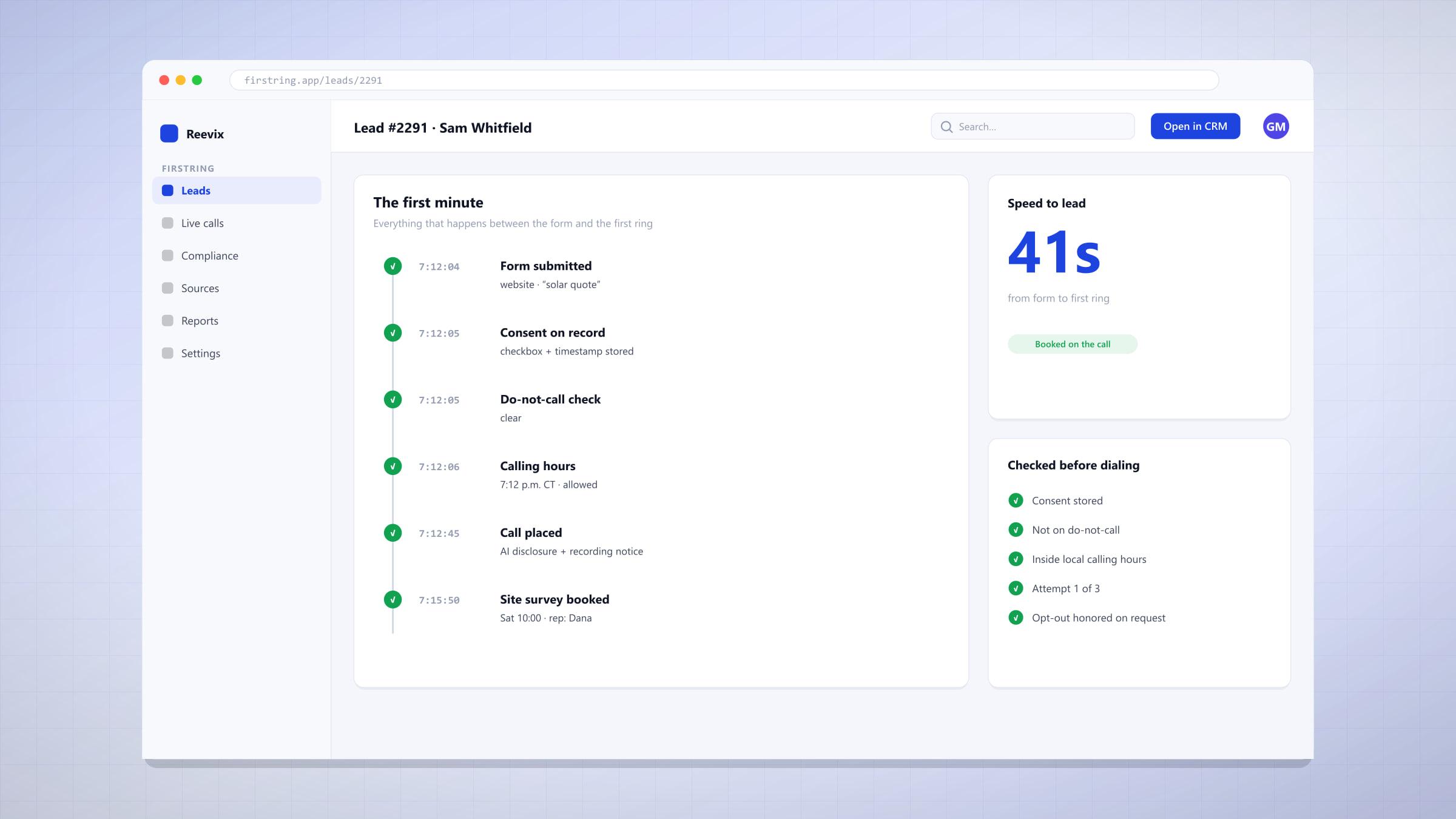
Speed to lead: why the first minute after a form decides the sale
A web lead is a person comparing you with two or three competitors at the same moment. The business that calls while they're still at the screen gets the conversation. Here's how to call every lead in under a minute without burning them, or your phone numbers.
speed to leadlead responseoutbound callingsales
Read the post 7
- Oct 20267 min readBooking#AI voice agents#IVR
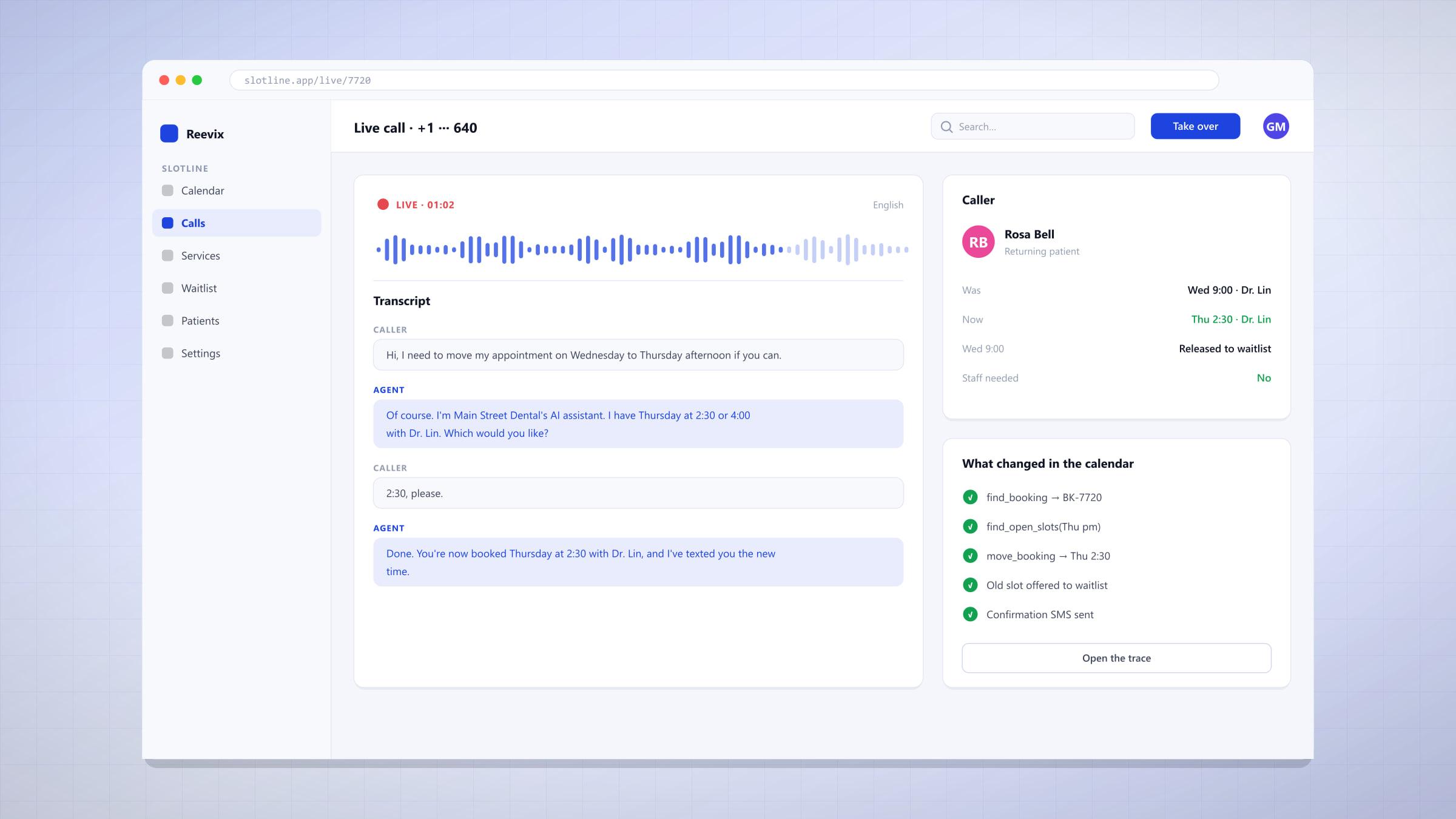
The difference between a phone tree and a voice agent is one calendar write
Every phone system sold this year claims to have an “AI agent.” Most of them are a phone tree with a nicer voice. The real test is simple: when the call ends, did anything in your calendar actually change?
- Oct 20268 min readReceptionist#AI receptionist#answering service
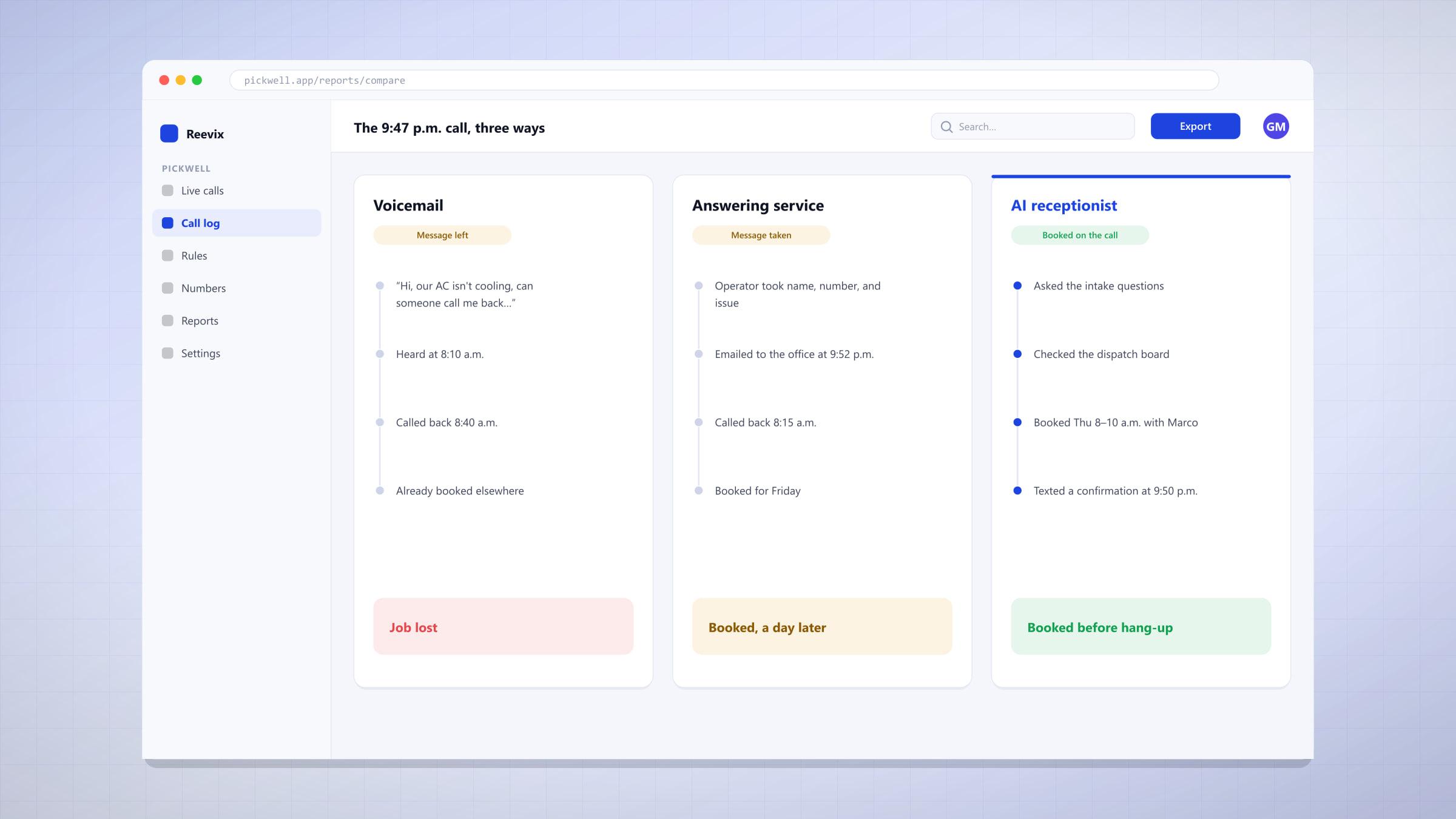
AI receptionist, answering service, or voicemail: what each one actually does with your call
All three pick up when you can't. Only one of them can usually book the job. Here's how they compare on what matters to a small business: what happens to the caller, what it costs, and what lands on your desk the next morning.
- Oct 20269 min readOutbound#compliance#TCPA
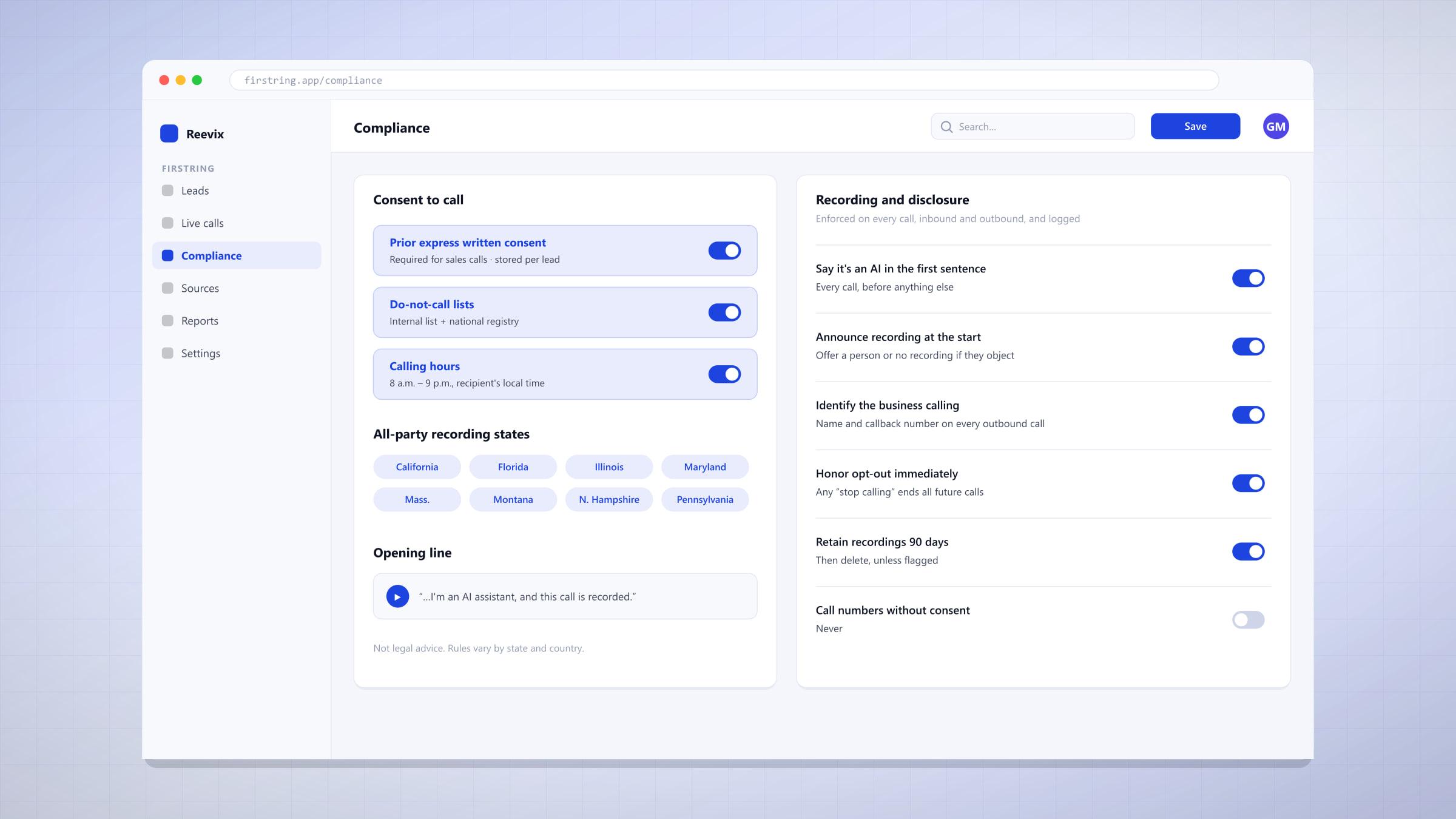
AI phone calls and the rules: consent, recording, and disclosure, in plain English
An AI voice agent is still a phone call, and phone calls come with rules. Here's the practical map: when you need consent to call, when you need consent to record, and why your agent should always say it's an AI.
- Sep 20268 min readPlatform#AI voice agents#guardrails
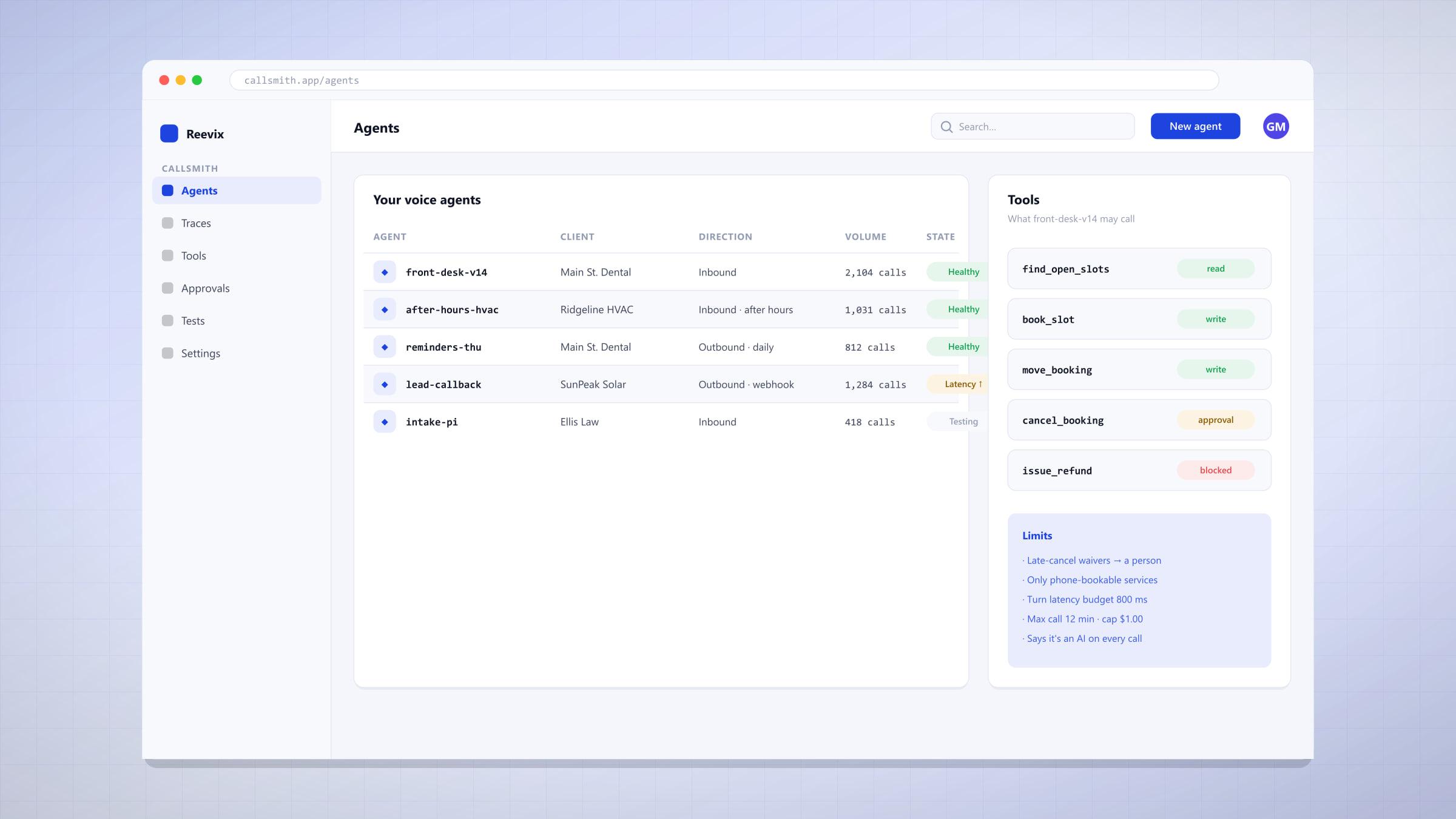
Give a voice agent tools, not the keys to your calendar and your payments
A voice agent with an API key can do anything the key allows, on a live call, in a second, with a customer listening. Narrow tools with written limits are the difference between an agent you can leave alone overnight and one you can't.
- Sep 20269 min readPlatform#unit economics#per-minute pricing
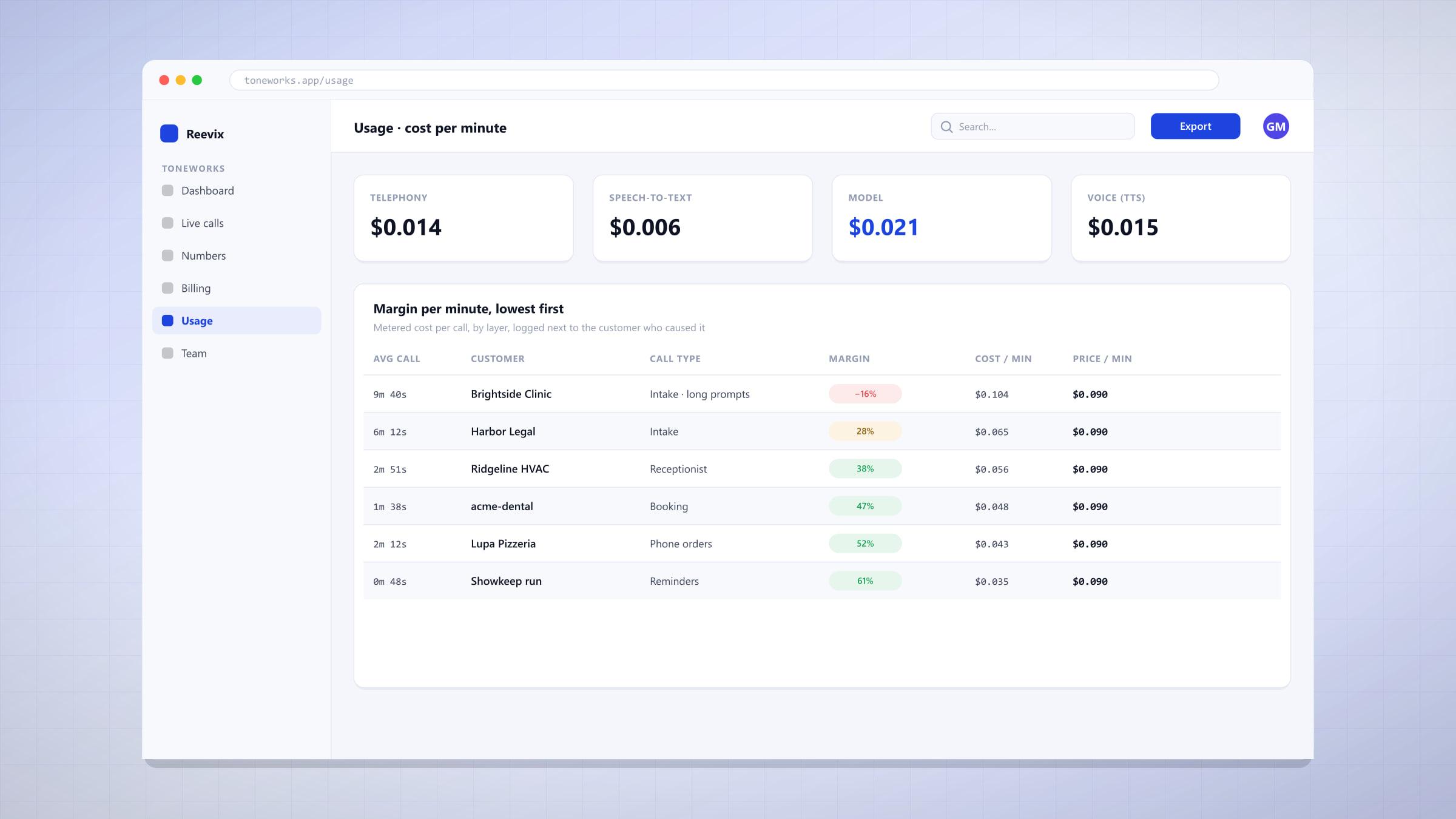
What an AI voice agent actually costs per minute
A voice agent's minute is four bills stacked together: the phone line, speech-to-text, the model, and the voice. Here's how to add them up, where the surprises are, and how to price minutes without losing money on your busiest customers.
- Aug 20268 min readBuild log#build vs buy#voice AI platforms
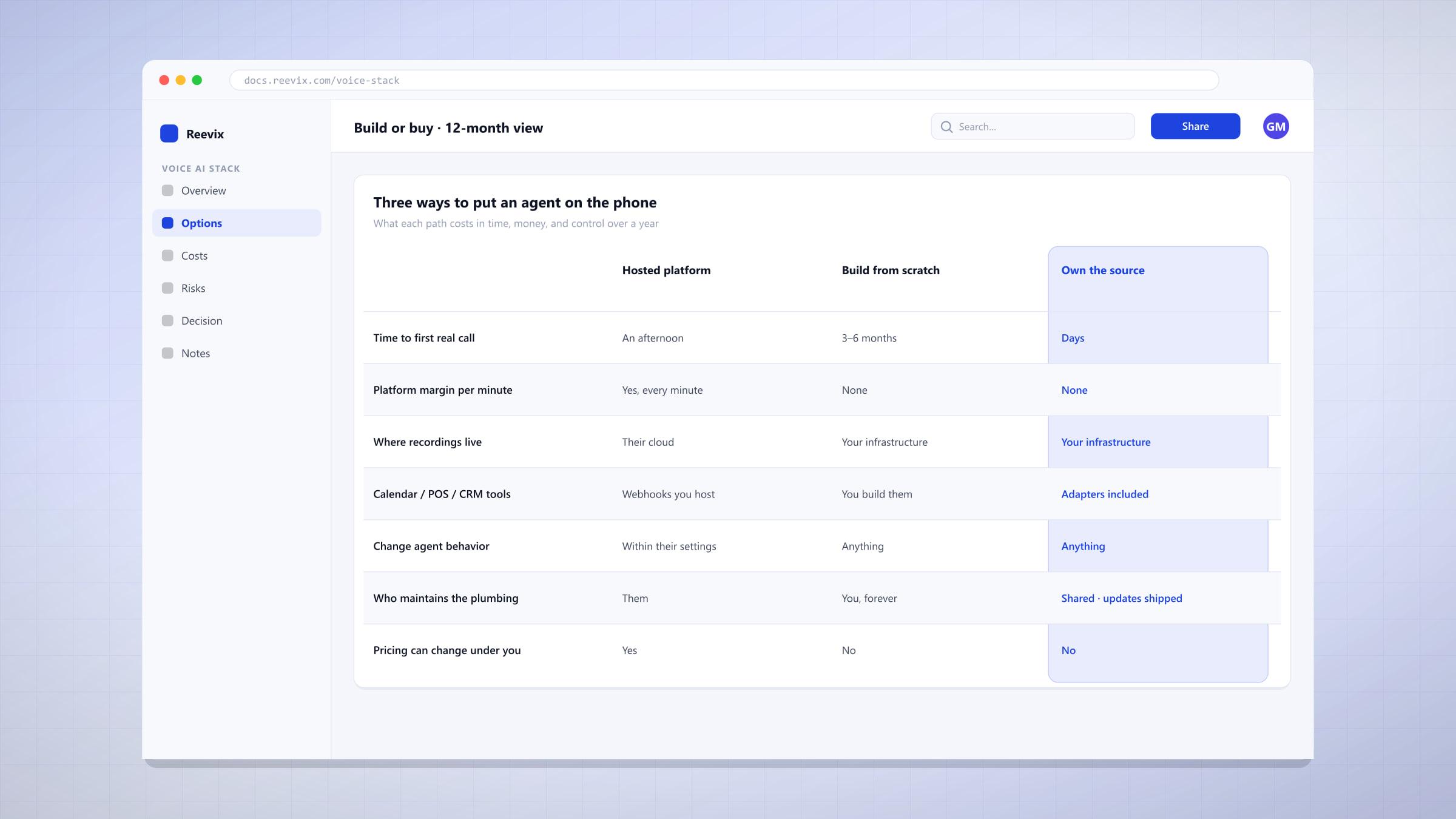
Build or buy your voice AI stack? The honest version
Hosted voice platforms get you a talking demo in an afternoon. Building it yourself gets you control of cost, data, and behavior, and months of plumbing. There's a middle path, and which one is right depends on three questions.
1–7 of 7 posts