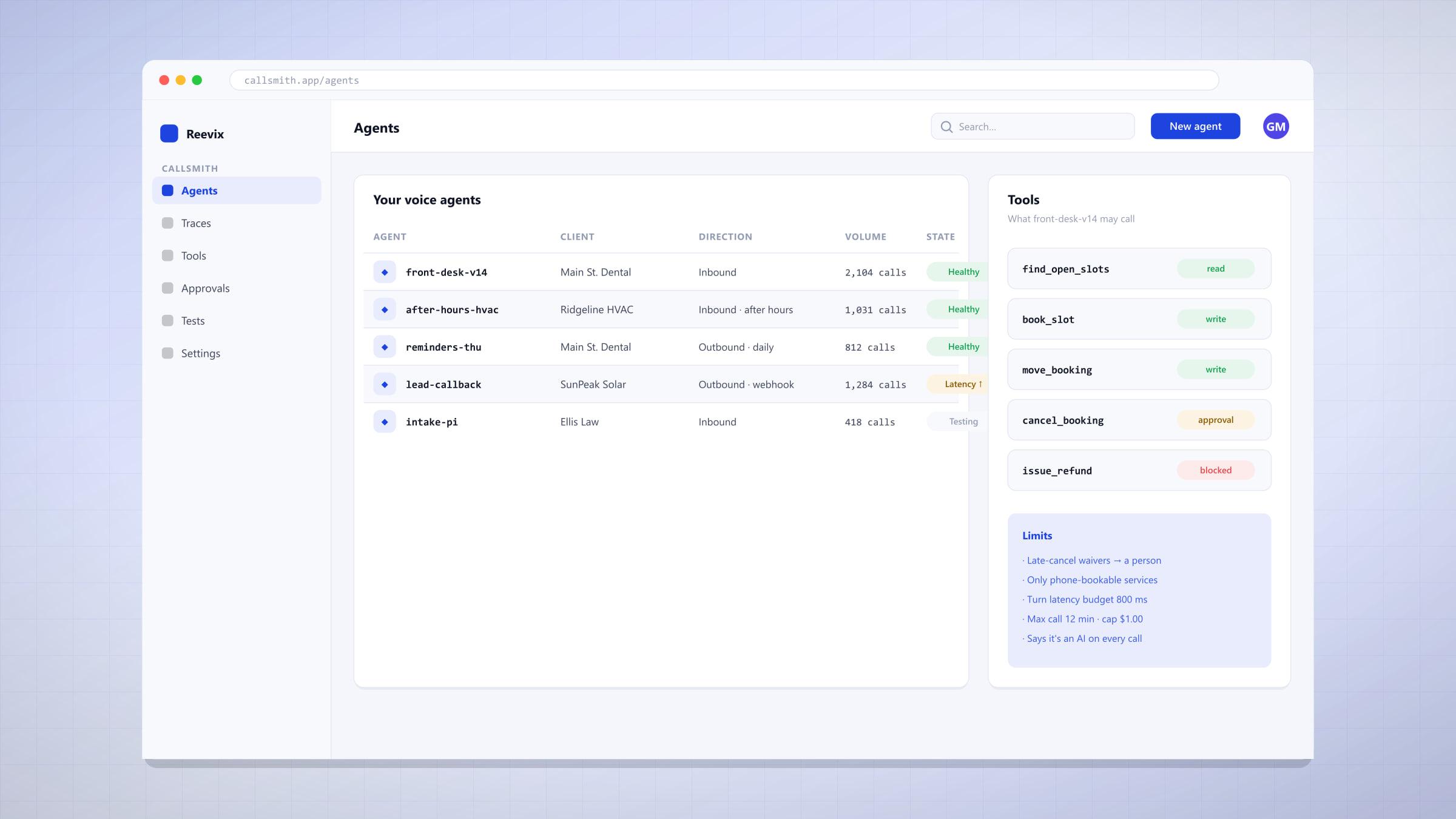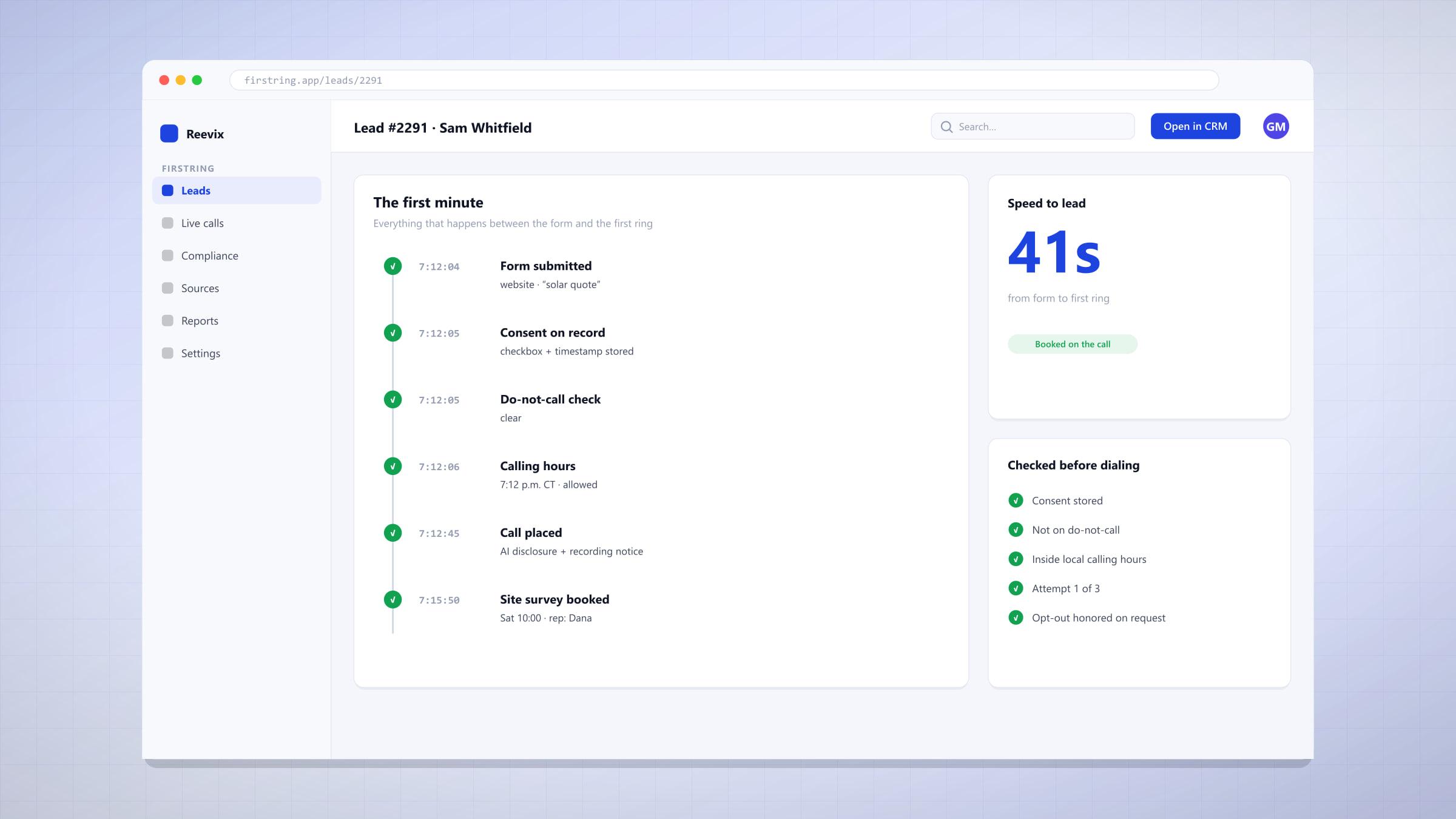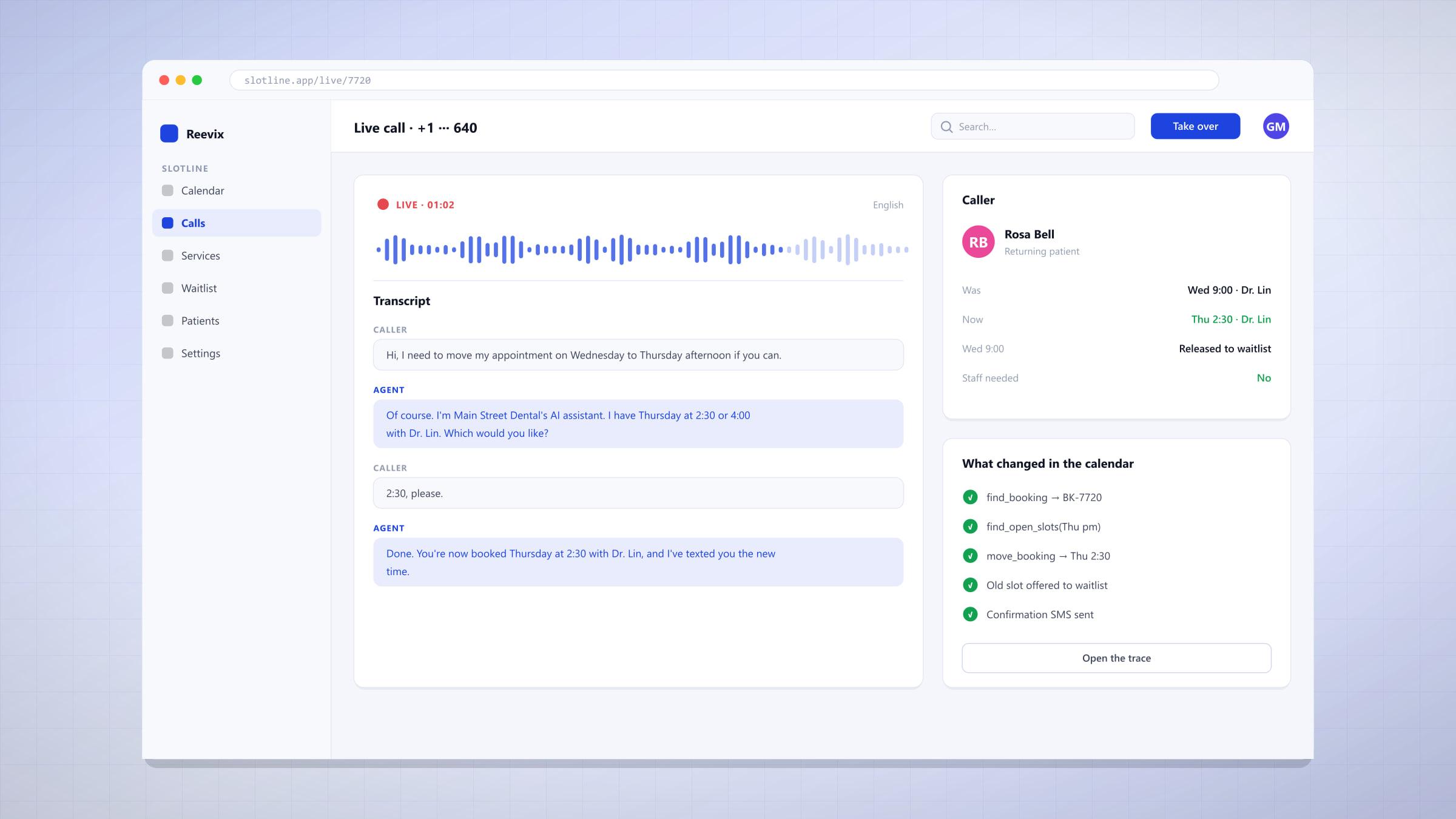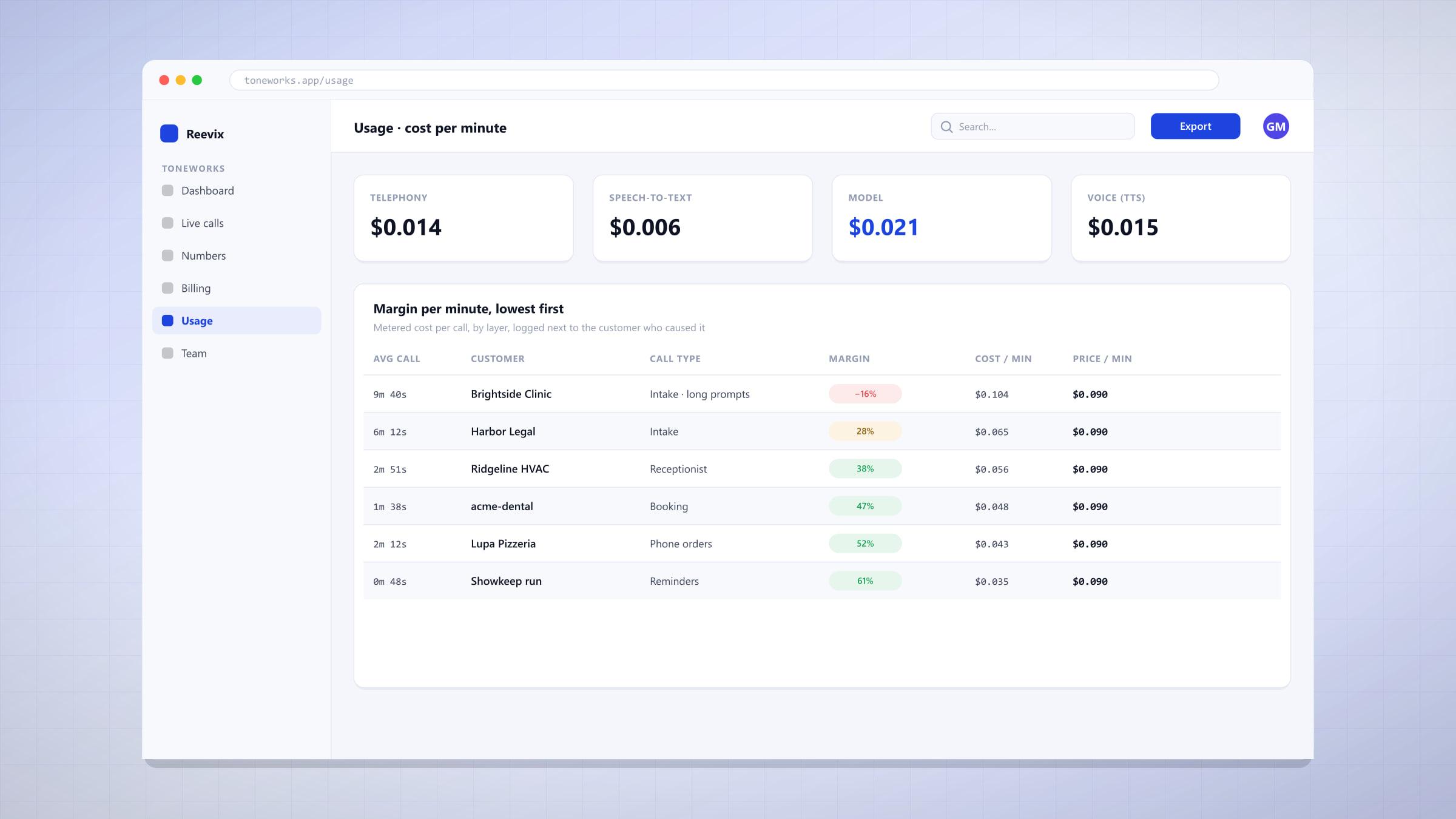
Ask what a voice agent costs and most people quote the model's price per million tokens. For a voice agent, that's the smallest line on the bill most of the time. A minute on the phone is four separate services running at once, and each one charges in its own unit.
Telephony (the phone line, per minute, inbound and outbound priced differently) + speech-to-text (per minute of caller audio) + the language model (per token, every turn) + text-to-speech (per character of what the agent says). Add recording storage and the per-number monthly fee, and you have the real cost.
Where the money goes
Telephony. You pay per minute for the call itself, usually more for outbound and toll-free than for local inbound, plus a monthly fee per number. It's predictable and it scales linearly with talk time.
Speech-to-text. Billed per minute of audio transcribed. Streaming transcription, which voice agents need for fast turn-taking, often costs more than batch.
The model. This is where the variance lives. Every turn re-sends the conversation so far plus the tool results, so a six-minute call costs far more than six times a one-minute call. Long system prompts and large knowledge snippets repeated on every turn are the usual culprit.
Text-to-speech. Billed by characters spoken. Premium, natural-sounding voices cost noticeably more than standard ones, and a talkative agent costs more than a concise one.
Meter before you price
The voice businesses that get pricing right meter every call before setting prices. That means real cost per call, broken down by layer and logged next to the customer who caused it. Within a couple of weeks, the meter will tell you things a spreadsheet won't. Restaurant order calls are short and cheap. Intake calls are long and expensive. One customer's ten-minute average call length is eating the margin on their whole plan.
Sell minutes, not tokens
Customers understand minutes. Price plans as a monthly fee with included minutes and a per-minute overage rate. Set the overage rate from your metered cost per minute plus the margin you need, not from a competitor's price page.
Then use the levers you control to protect the margin:
The report that matters
Every voice AI business ends up building the same report: minutes, revenue, and provider cost per customer, every month, with the margin per minute next to each. Sort by margin, and the bottom ten rows will tell you more about your pricing than any competitor analysis.
The per-minute price on your website is a promise. The per-minute cost in your meter is the truth. Make sure you know both before your first big customer does.
If you'd rather not build this yourself, that's what our products are for — AI receptionists, phone booking, outbound calling, and voice platforms, already written and ready for your stack.
Golam Mostafa writes every product in the Reevix catalog, and answers its support. Get every deep-dive and every product with All-Access.