When a small business decides it's missing too many calls, it usually has three options on the table: let calls go to voicemail and call back, hire a human answering service, or put an AI receptionist on the line. They look similar from the outside, since all three pick up when you can't. The difference shows up in what happens to the caller during the call, and what's waiting for you afterward.
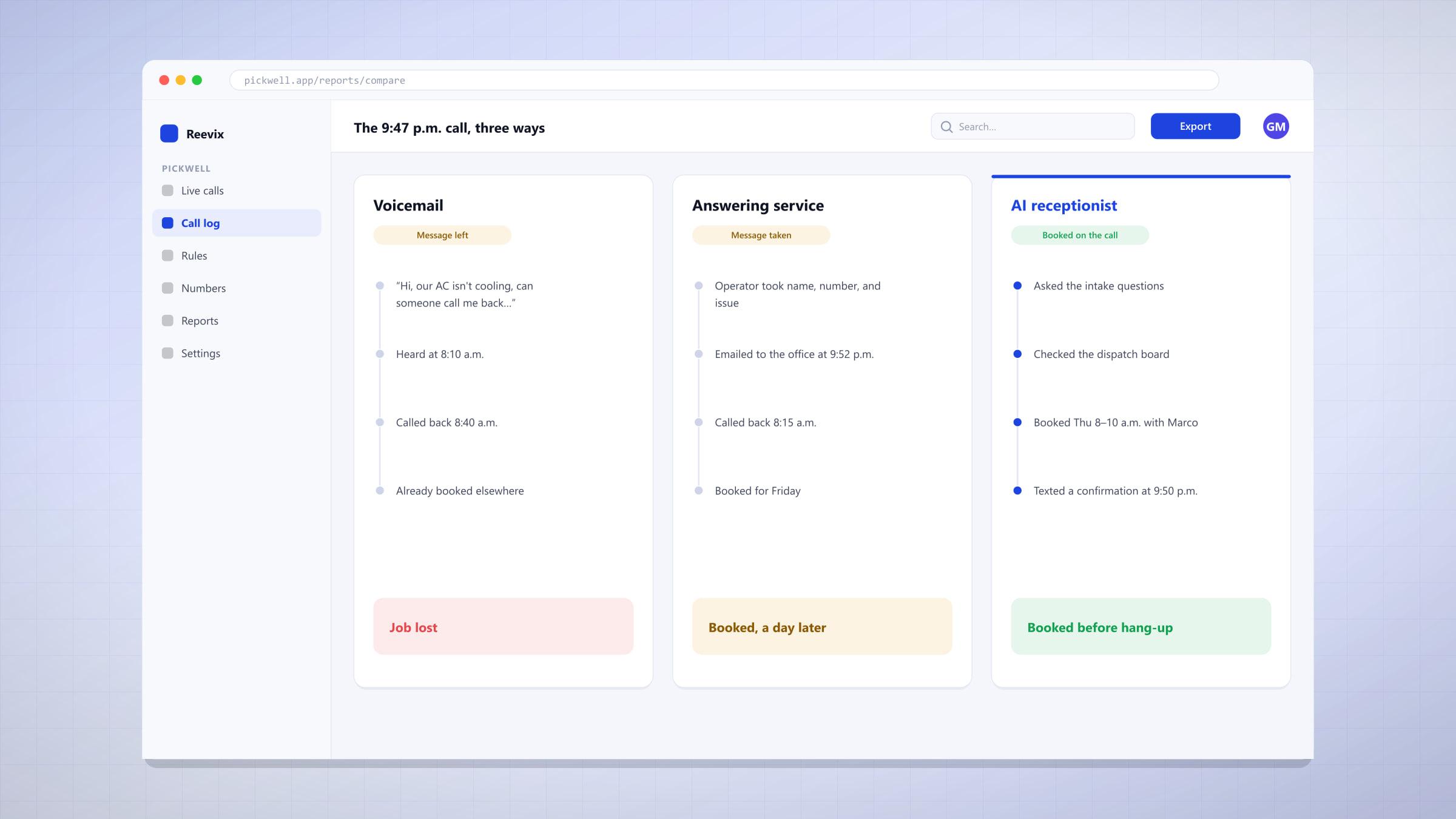
Voicemail records the problem. An answering service writes it down. An AI receptionist connected to your calendar can usually solve it, booking the visit before the caller hangs up. Where a person still beats both is the hard call: the upset customer, the unusual request, the judgment call.
Voicemail: free, and the most expensive option
Voicemail costs nothing up front. Its cost shows up in the callers who don't leave a message, and many don't. Someone calling about a leaking water heater or a toothache usually isn't calling one business. They're working down a list, and the first one who answers gets the job.
The callers who do leave a message still cost you time. Someone has to listen, call back, play phone tag, and then do the booking that could have happened on the first call.
Human answering service: a person, with a script
An answering service puts a real person on the line, and for many businesses that was the right answer for years. The caller hears a human, the message gets taken properly, and true emergencies get passed on.
The limits are structural. The operator is answering for dozens of businesses at once, so they know your business only as well as the script in front of them. Most services take messages rather than book directly into your calendar, and pricing is usually per minute or per call, which gets expensive in exactly the months you're busiest. Wait times can also stretch when the service is having its own rush.
AI receptionist: does the work, inside limits
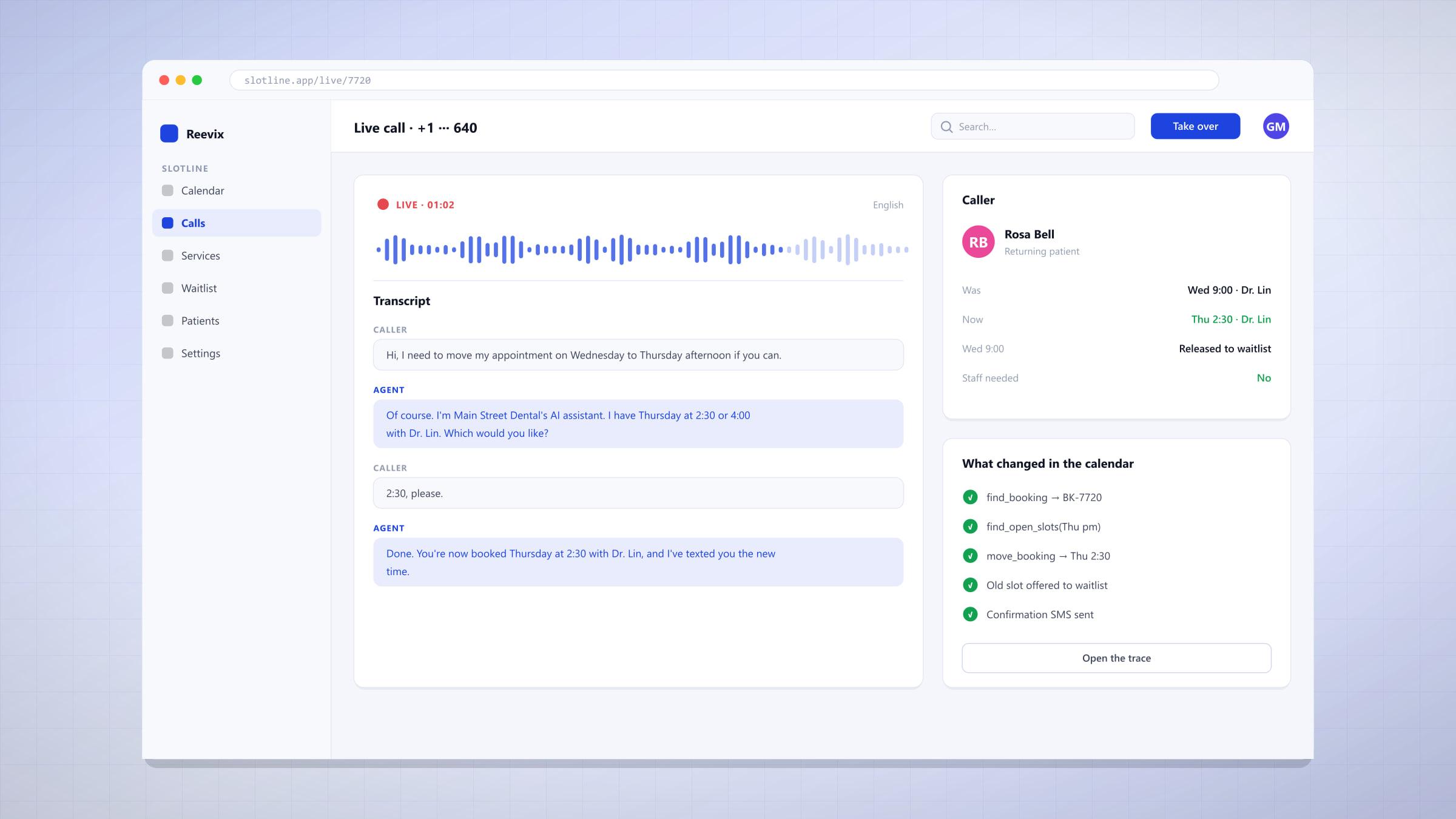
An AI receptionist answers on the first ring, takes as many calls at once as you get, and doesn't get tired at 2 a.m. The real difference, though, is what it's connected to. A good one reads your services, prices, and calendar, so it can do more than take a message. It can quote from your price list, book the visit, text the confirmation, and send real emergencies to your on-call phone with a summary.
It also needs the most care to set up well. It has to know your business, and it needs clear limits on what it can promise. Every call should be recorded and reviewable, so you can see what it said and fix what it got wrong.
How to choose
Whatever you choose, measure it the same way: of the calls that came in after hours last month, how many turned into booked work? That one number will tell you more than any feature list.
A missed call isn't a message. It's a customer deciding who to call next.
If you'd rather not build this yourself, that's what our products are for — AI receptionists, phone booking, outbound calling, and voice platforms, already written and ready for your stack.
Golam Mostafa writes every product in the Reevix catalog, and answers its support. Get every deep-dive and every product with All-Access.