The fastest way to build a voice agent is to give the model your calendar API key, your POS credentials, and a long prompt explaining what it should and shouldn't do. It works in the demo. It also means the only thing standing between a caller and a cancelled day of appointments is the model's reading of a paragraph of instructions.
Voice makes this sharper than chat. Calls are fast, they're live, and the caller is persuasive in real time. "My manager said you'd waive the fee" lands differently when it's spoken, and an agent has a second or two to decide, not a minute.
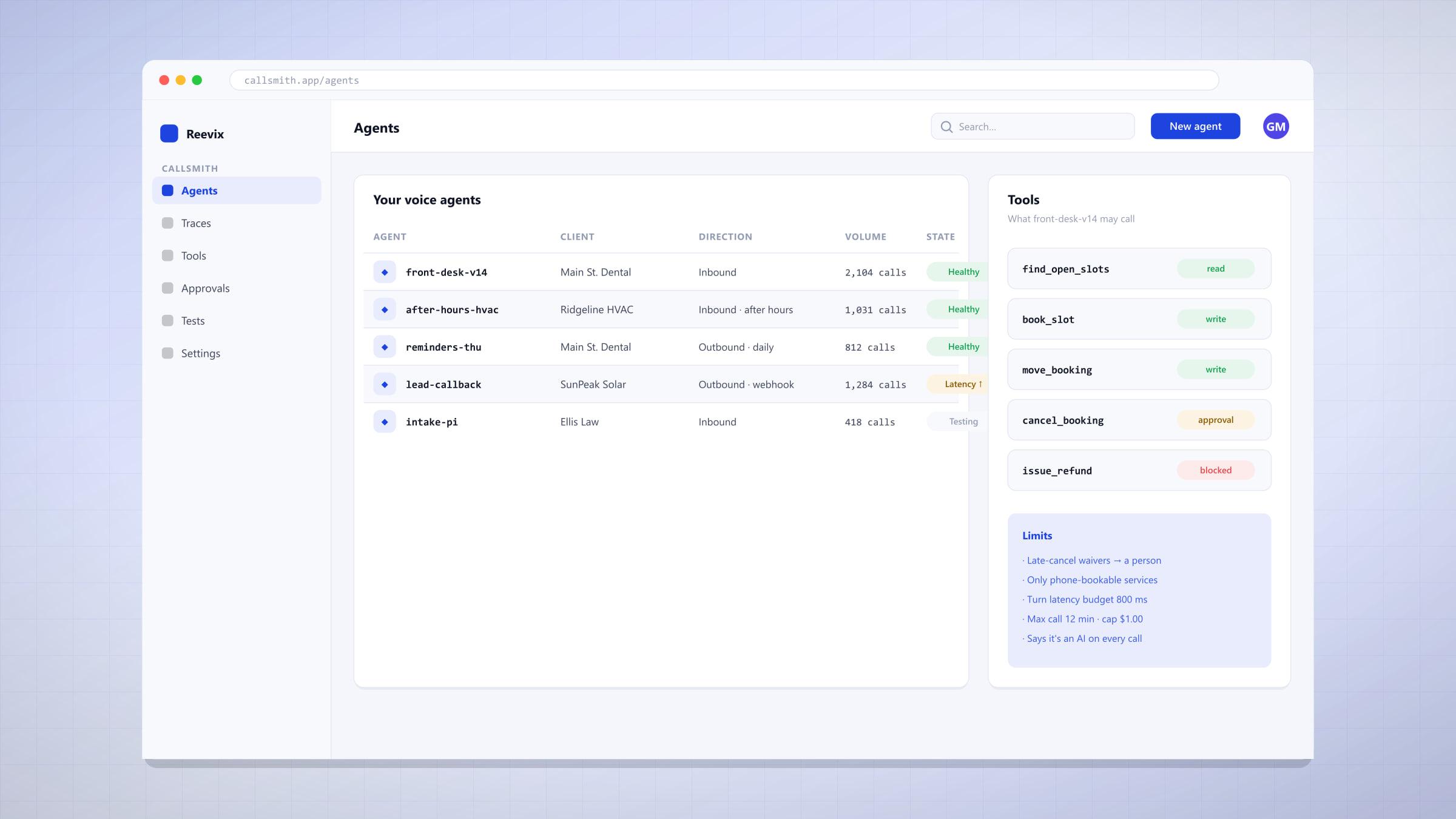
Don't give an agent credentials. Give it tools: small, typed functions that do one thing, check their own limits in code, and log every call. The prompt says how to talk. The code decides what's allowed.
What a tool looks like
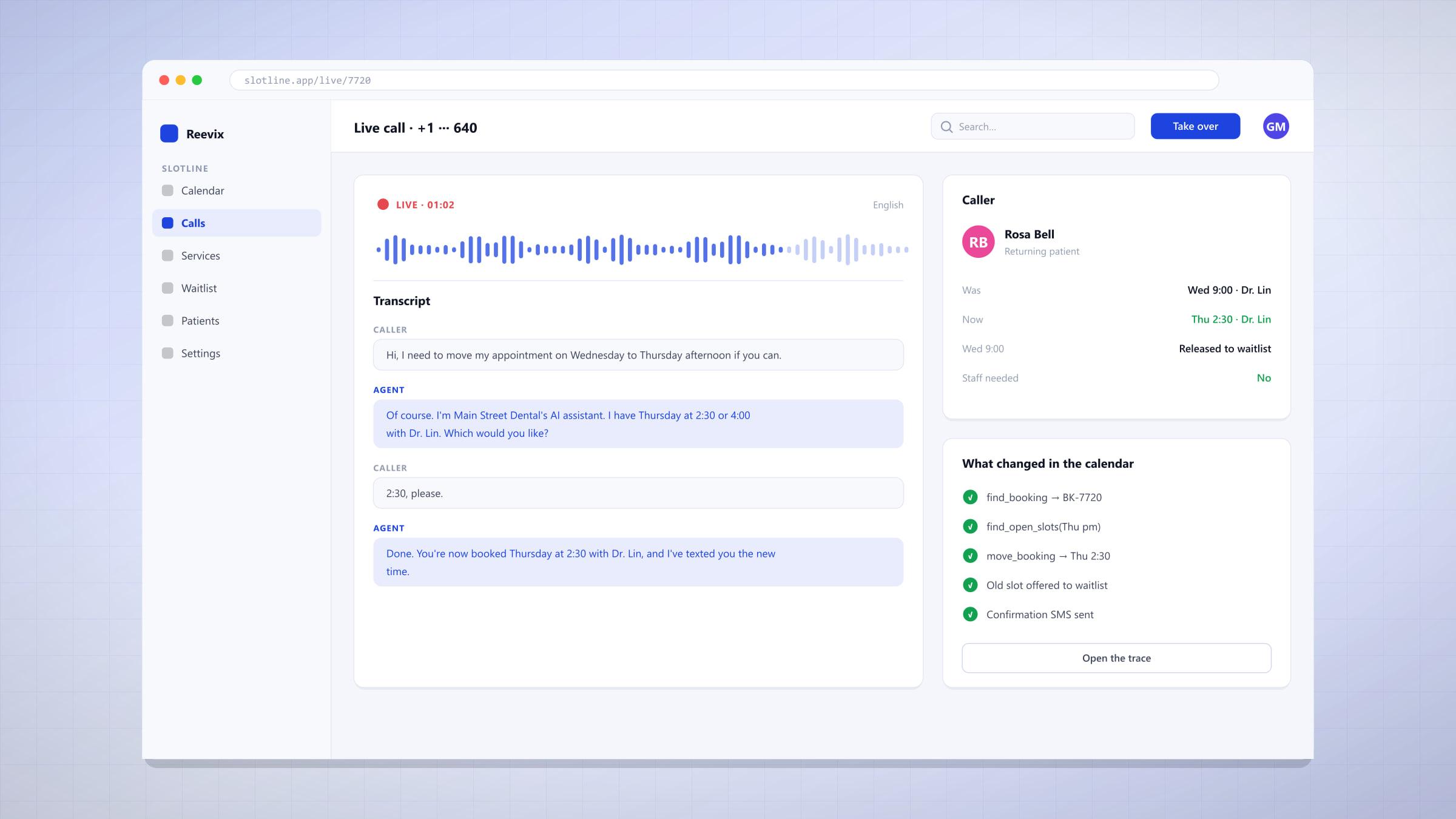
Instead of a calendar key, the agent gets find_open_slots(service, provider, date_range), book_slot(slot_id, patient_id), and move_booking(booking_id, new_slot_id). Each one checks its own rules before doing anything. Is the slot actually open? Is this service bookable by phone? Is the move inside the cancellation window?
Instead of POS credentials, a restaurant agent gets create_order(items) that validates every item against the live menu and rejects anything sold out. A support agent gets start_return(order_id) that refuses orders outside the return window, whatever the caller says.
Limits belong in code
Every action with money or commitment attached needs a written limit, enforced by the tool and not by the prompt:
When the agent hits a limit, it shouldn't argue or improvise. It should say what it can do ("I've sent that to the team, and someone will call you back before noon"), then file the request with a summary.
Approval gates for the rest
Some actions are fine, but only with a person's sign-off: a refund over your ceiling, a same-day cancellation with the fee waived, a group booking that blocks a whole afternoon. Those go into an approval queue. The agent tells the caller what happens next, the tool call is held, and someone approves or declines it with the full call trace in front of them.
Log every call, not just the transcript
A transcript tells you what was said. A trace tells you what was done: each tool call, its inputs, the result, and the limit that stopped it. When a customer says "your system cancelled my appointment," the trace answers that question in seconds. Without it, you're replaying recordings and guessing.
Prompts are suggestions. Tools are contracts. Put the money behind the contract.
If you'd rather not build this yourself, that's what our products are for — AI receptionists, phone booking, outbound calling, and voice platforms, already written and ready for your stack.
Golam Mostafa writes every product in the Reevix catalog, and answers its support. Get every deep-dive and every product with All-Access.