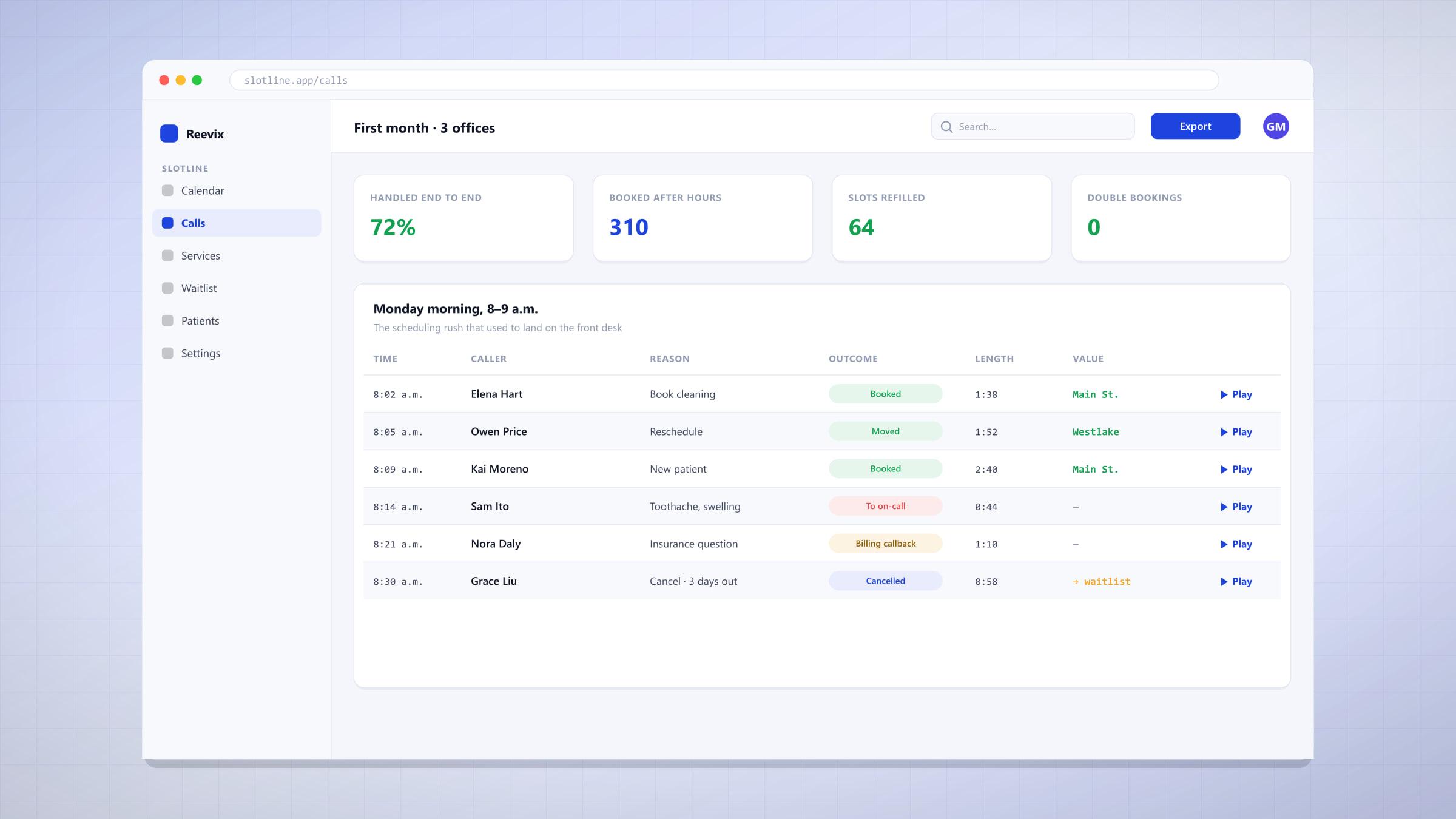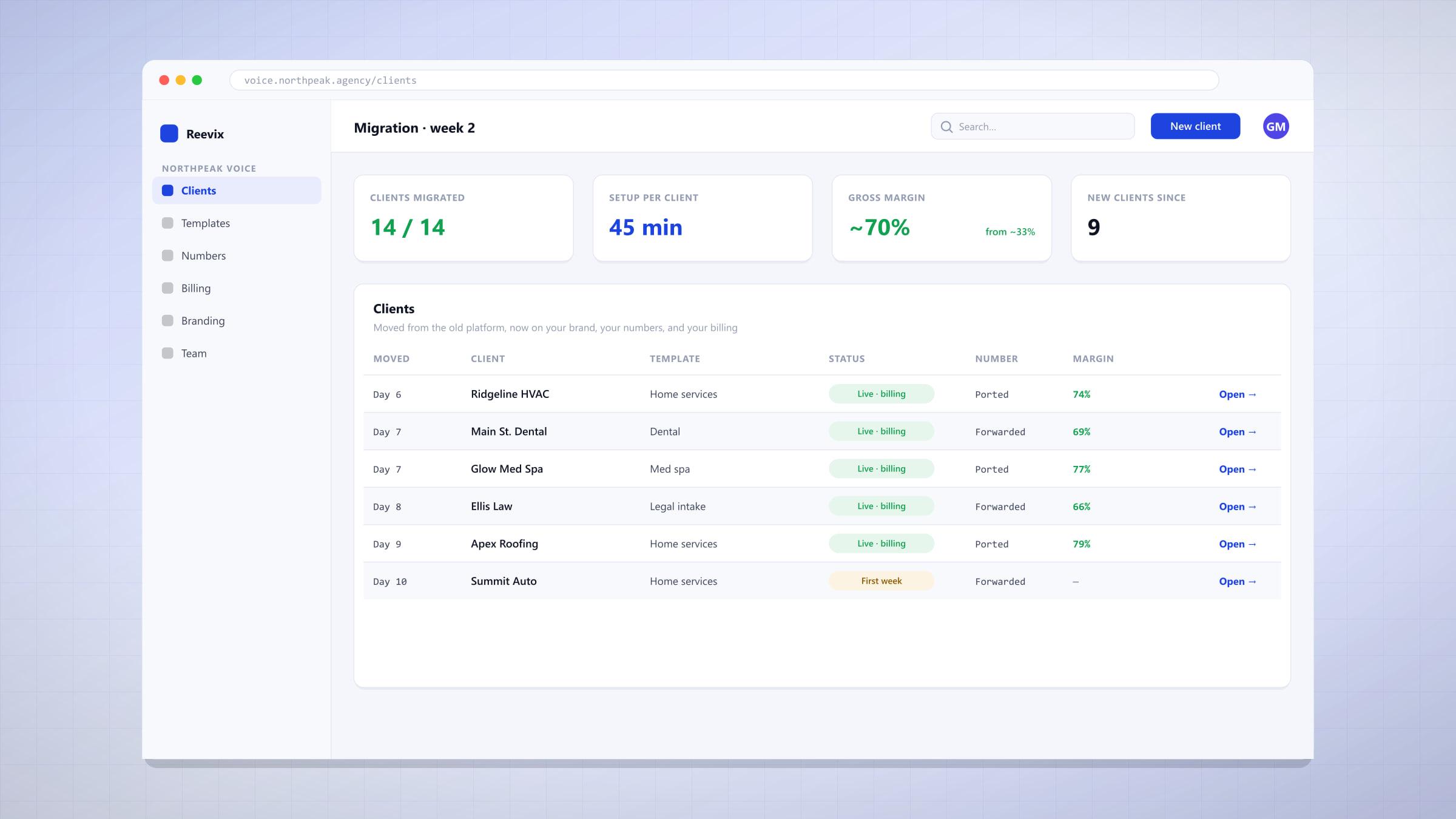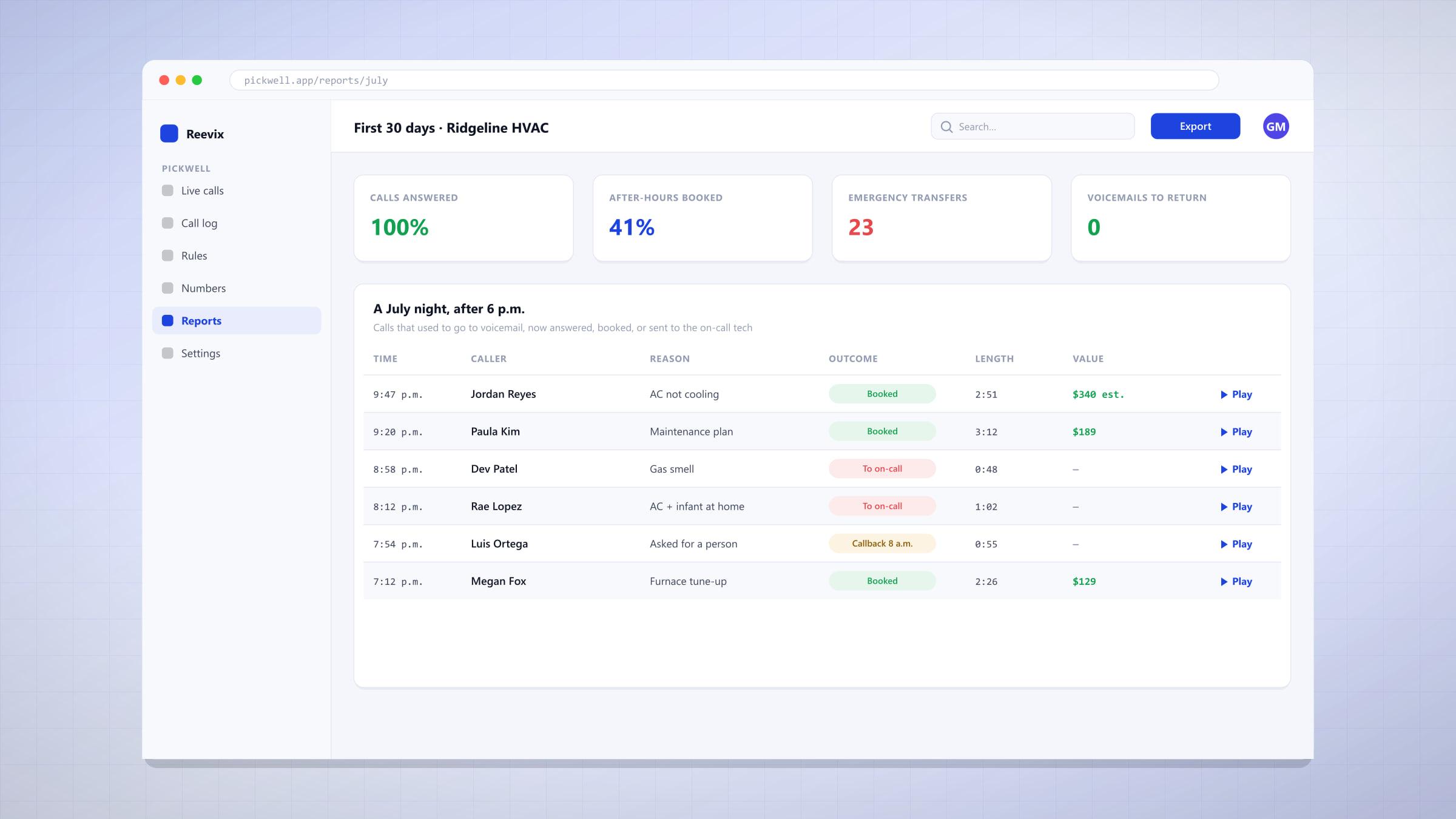
The company had a phone problem it could describe precisely and couldn't fix. In mild weather, two dispatchers answered almost every call. In the first heat wave of the summer, call volume roughly tripled, both dispatchers were on the phone at once, and everything else went to voicemail. After 6 p.m. it all went to voicemail, including the calls that mattered most: an AC dead in a house with a newborn, or a rooftop unit down at a restaurant on a Friday night.
When they pulled their phone records, the picture was blunt. About a third of July's calls had been missed, more than half of those after hours, and most missed callers never left a message.
Residential and light-commercial HVAC · 12 trucks, 2 dispatchers · ~2,600 calls/month in peak season · Pickwell AI Receptionist, self-hosted · 5 days from kickoff to answering the main line.
What they'd already tried
An answering service, for two summers. It picked up, but it took messages rather than booking, so every overnight call still became a callback the next morning, by which time many of those customers had booked someone else. The per-minute bill also peaked in exactly the months that were already the most expensive.
The owner's summary was the brief: "I don't need someone to take a message. I need someone to put the job on the board."
What we did
Day one was knowledge. Pickwell was loaded with their services, service area by ZIP code, diagnostic fee, maintenance plan, and hours, and connected to the dispatch calendar so it could see real open windows by technician.
Day two was the rules. Booking a standard repair or maintenance visit: allowed, into open windows only. Quoting: diagnostic fee and maintenance plan prices only, never a repair price. Emergencies (no cooling with an infant, elderly, or medically vulnerable person in the home; any gas smell; commercial refrigeration down) transferred straight to the on-call technician with a written summary. Anyone who asked for a person got one during business hours, or a guaranteed callback by 8 a.m.
Days three and four ran in overflow mode during business hours. Pickwell answered only when both dispatchers were busy, and the dispatchers reviewed every call it took. Their corrections, mostly about which jobs needed a senior tech, became rules. On day five, it took over after-hours and overflow for good.
The results
We used to start every summer morning with a list of people we'd already lost. Now we start with a board of jobs that booked themselves overnight. — Owner
The pattern
Answering the phone was never the hard part. Two decisions did the work: connecting the receptionist to the real dispatch calendar, so it could book instead of taking messages, and writing the emergency and quoting rules in code before go-live. Running in overflow mode for a few days, with the dispatchers reviewing the calls, is what made the team trust it in July.
Golam Mostafa wrote the code behind these results. Planning something similar? Talk it through first.