Teams price AI features using the intuition they built on chat: a message is a request and a response, the cost is a fraction of a cent, nobody sends enough of them to matter.
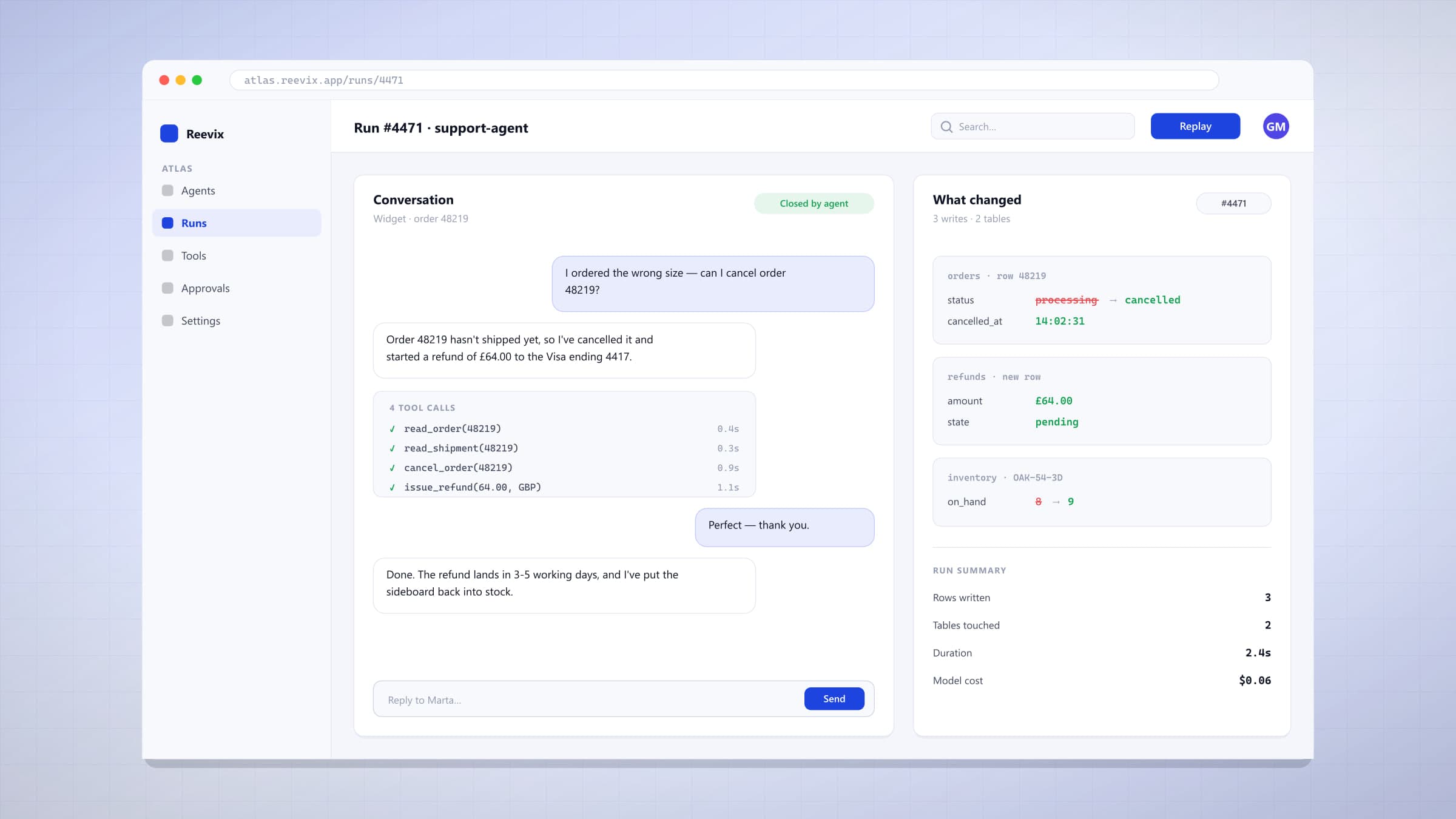
Agents break that intuition immediately. One agent run is not one model call. It is a planning call, a tool call, a call to interpret the tool result, often a retry, and a final call to write the answer — each one carrying the accumulated context of the ones before it. A run that reads twelve orders and drafts twelve emails can be forty model calls with a growing context window attached to every one.
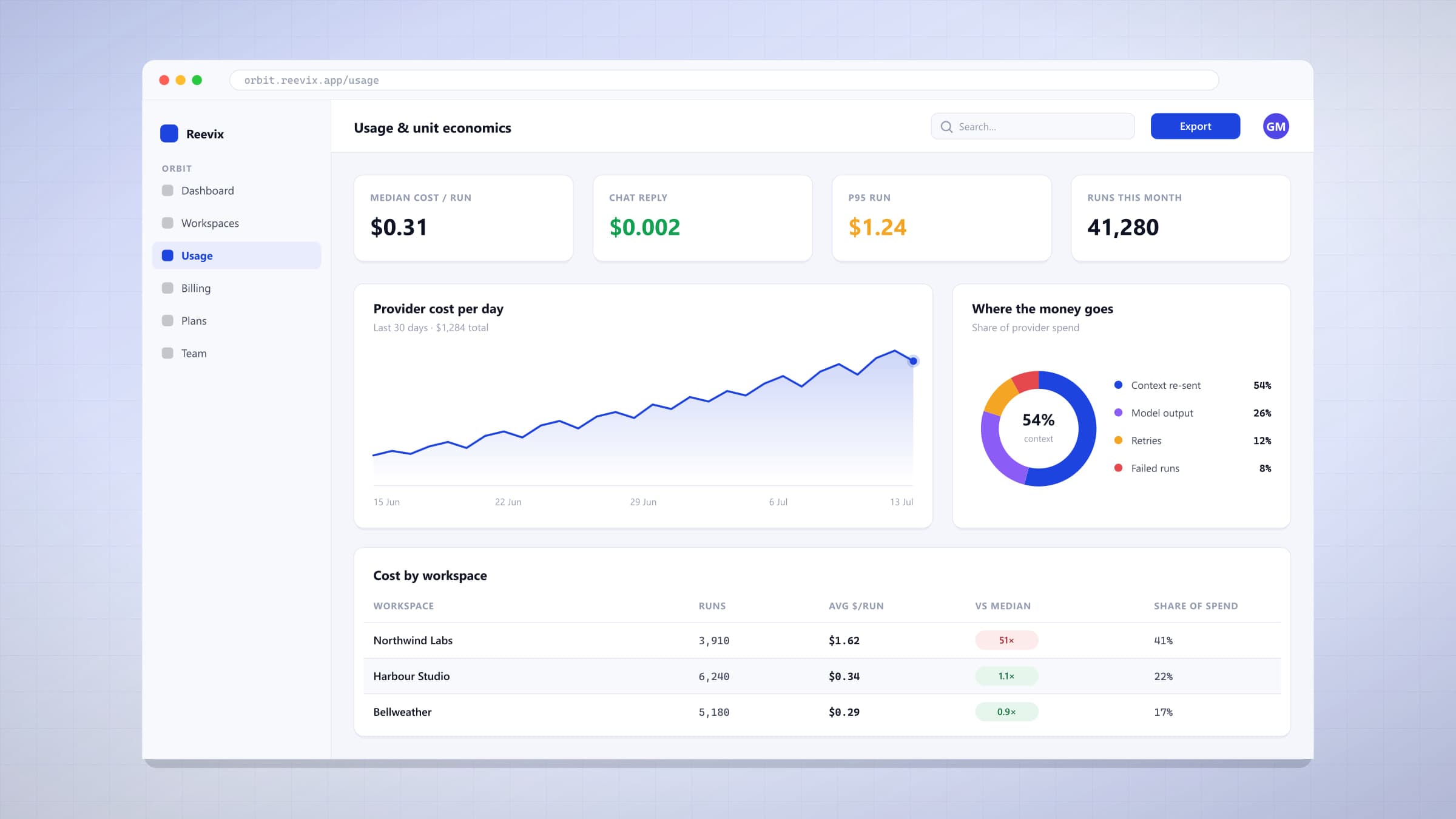
A chat reply might cost a fifth of a cent. The equivalent agent run — same model, same customer — routinely costs ten to forty cents. Not a different order of magnitude in aggregate. Two.
Where the money actually goes
Three drivers dominate, and only one of them is the model you picked.
Meter before you price
You cannot price what you cannot count, and the counting has to be per run, not per month. Record, for every run: the workspace, the agent, the number of steps, input and output tokens, and the provider cost at the rate in force that day. Store rows, not a running total, so you can answer questions you have not thought of yet.
Build it before the feature ships. Teams that add metering afterwards discover their pricing problem with a year of customers already on the wrong plan, which turns a config change into a migration.
Credits, not tokens
Selling tokens directly is honest and unsellable — nobody budgets in tokens, and a customer thinking about token counts is a customer thinking about leaving. Define a credit as one unit of value the customer recognises: a conversation handled, a document processed, a catalog pass. Price actions in credits and keep the credit-to-cost ratio as an internal setting.
That indirection is what lets you absorb provider price changes without renegotiating with every customer, and what lets you charge more for an expensive action than a cheap one without explaining why.
Degrade, do not stop
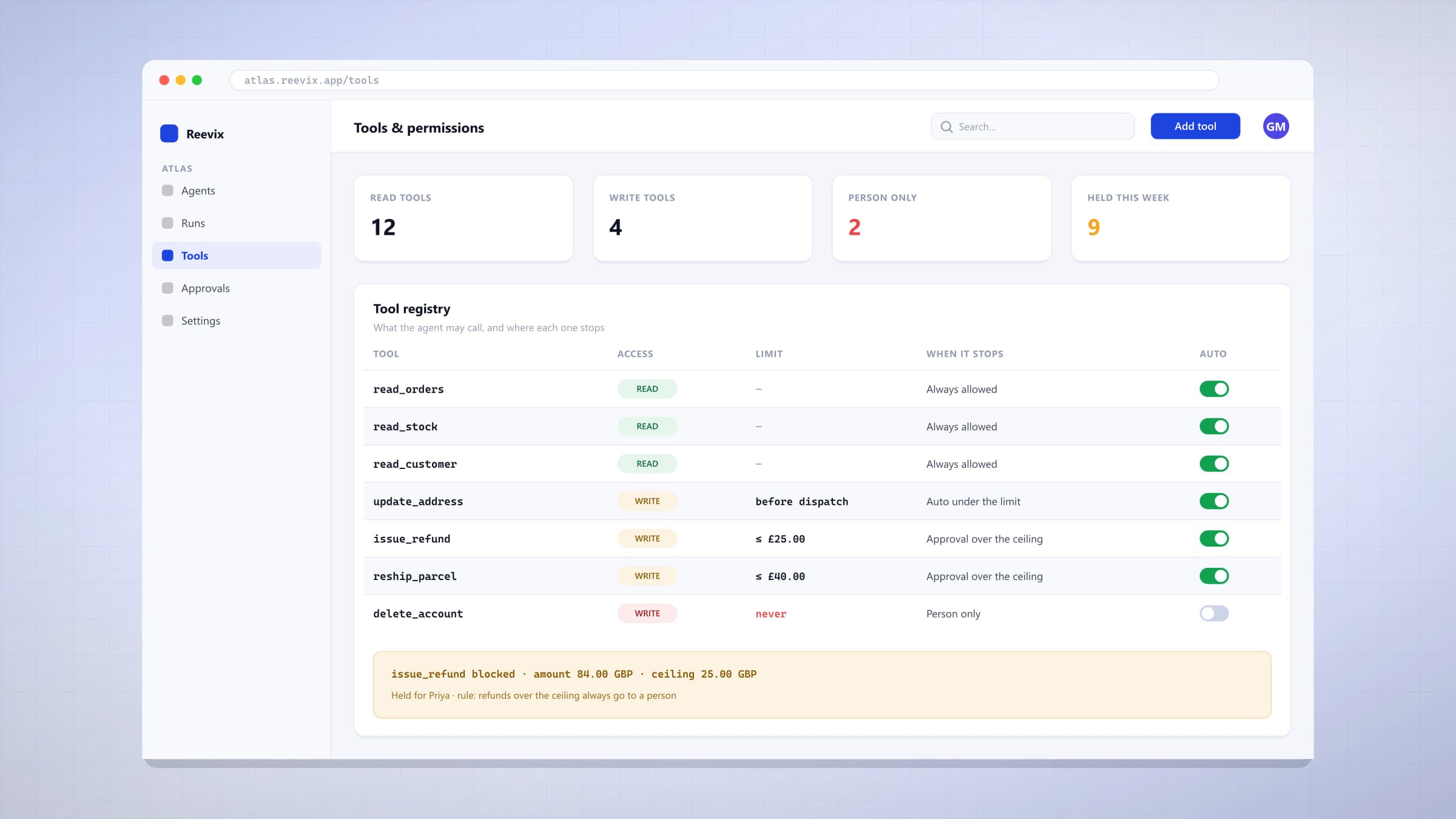
Every plan needs a ceiling, and the ceiling is a product decision. An agent that hard-stops mid-queue on a deadline day costs the account. Warn at eighty percent, warn again at a hundred, then degrade: queue the run, drop to the cheaper model, or offer a one-click top-up right there.
Overage should be possible and obvious. The customer who exceeds their limit twice a month is your best upgrade conversation, and you only get to have it if the system let them.
The report that matters
Not revenue. Revenue minus provider cost, per workspace, sorted ascending. The bottom of that list tells you which customers are unprofitable, whether that is a pricing problem or a retry-loop bug, and whether your cheapest plan should exist.
Every agent business builds this report eventually. The ones that build it before launch get to choose their prices. The ones that build it after get to explain them.
If you'd rather not build this yourself, that's what our products are for — storefronts, SaaS boilerplates, marketplaces, and support agents, already written and ready for your stack.
Golam Mostafa writes every product in the Reevix catalog, and answers its support. Get every deep-dive and every product with All-Access.