Agentic commerce is described, usually, as a future in which shopping agents buy things on a customer's behalf and stores must be machine-readable to survive. That future may arrive. It is not what is changing in stores this year.
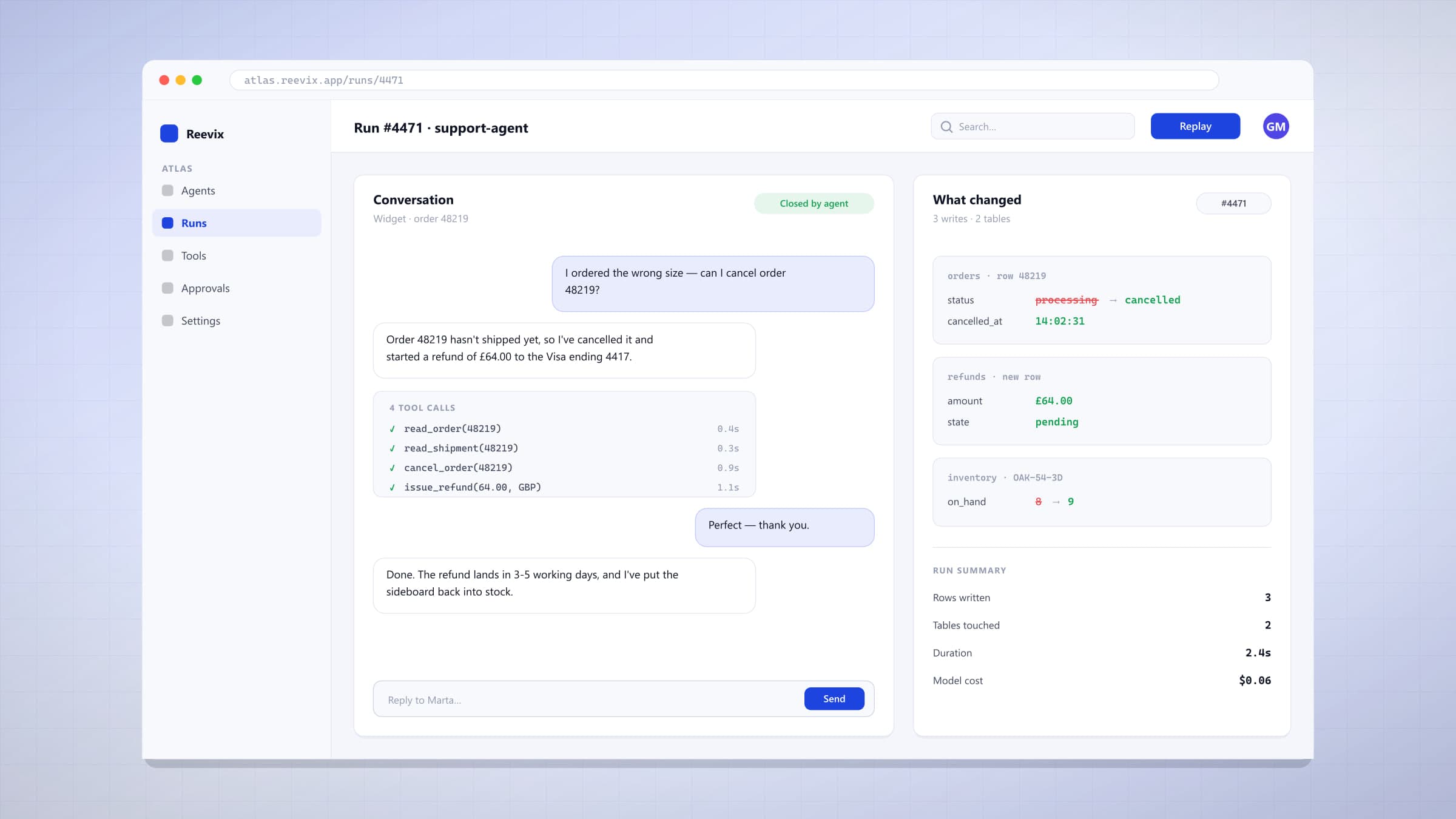
What is changing is duller and much closer: two jobs that every small store knows it should do, has never had the headcount to do, and can now hand to something that does them at 3am.
Job one: the shopper standing in front of the shelf
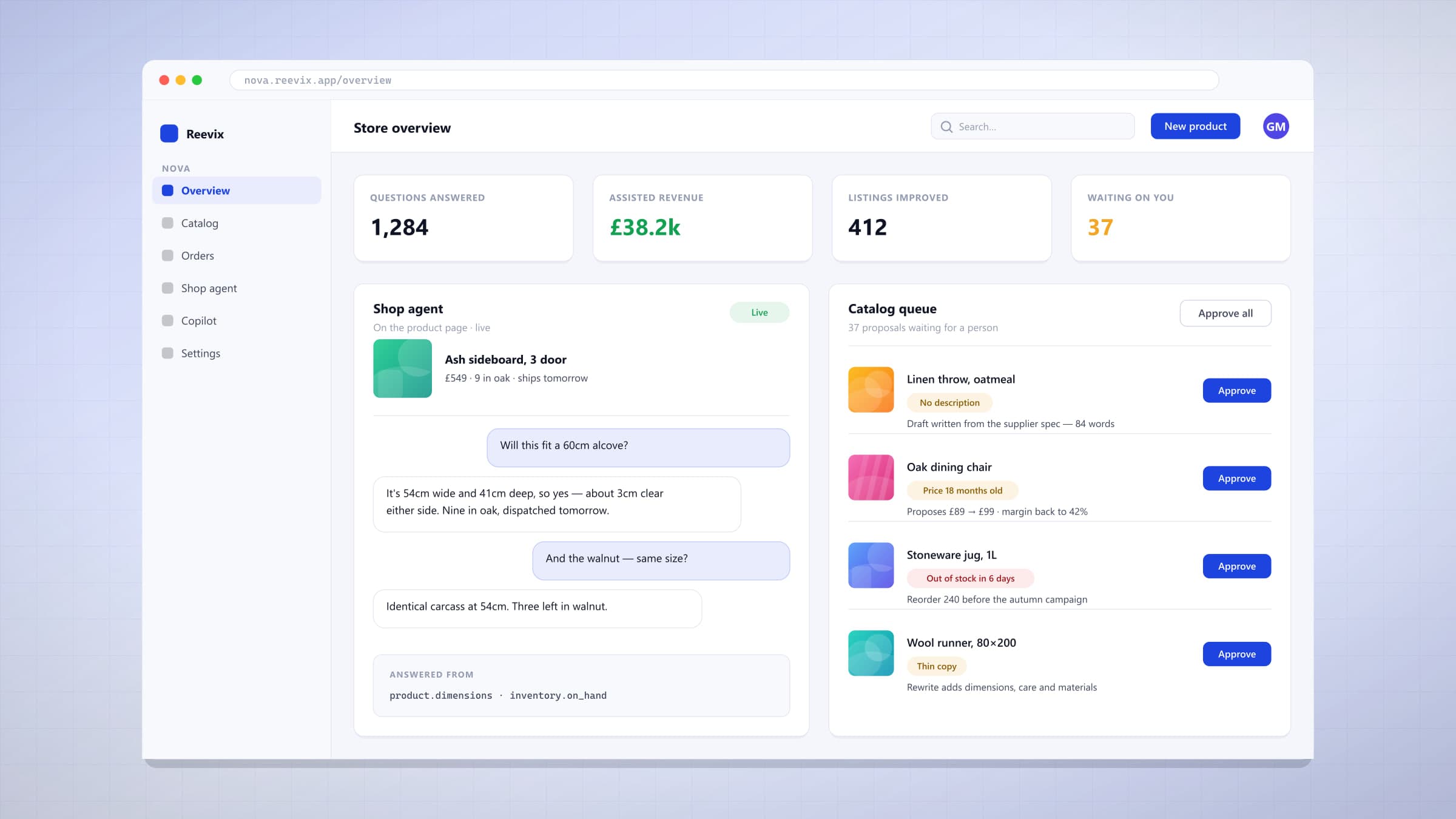
Every store loses sales at the same moment. A shopper is on the product page, nearly convinced, and has one question — will it fit, will it arrive by Friday, is the oak the same as the walnut. There is no one to ask. The FAQ does not cover it. They leave, intending to come back, and do not.
An agent on that page closes the gap, but only if it is wired to the product record rather than the marketing copy. "54cm wide, and there are nine in oak" is a sale. "Our products are designed to fit a variety of spaces" is the same lost sale with more words.
An agent with your catalog, stock, and order data answers like staff. The same model with only your marketing site answers like marketing. Identical technology; opposite outcomes.
Job two: the catalog nobody opens
The second job runs the other way — not toward the customer, toward the four thousand rows nobody has looked at since import. Listings with no description. Photos that are hurting conversion. Prices set eighteen months ago against costs that have moved. Stock that will run out during the campaign you are about to launch.
This is where an agent earns its keep quietly. It reviews the catalog on a schedule, writes what is missing, flags what is weak, and proposes the price and stock moves with the maths attached. Nothing publishes itself: the output is a queue you approve in one pass over coffee. A person who had no time to audit four thousand products has plenty of time to approve three hundred proposals.
What does not change
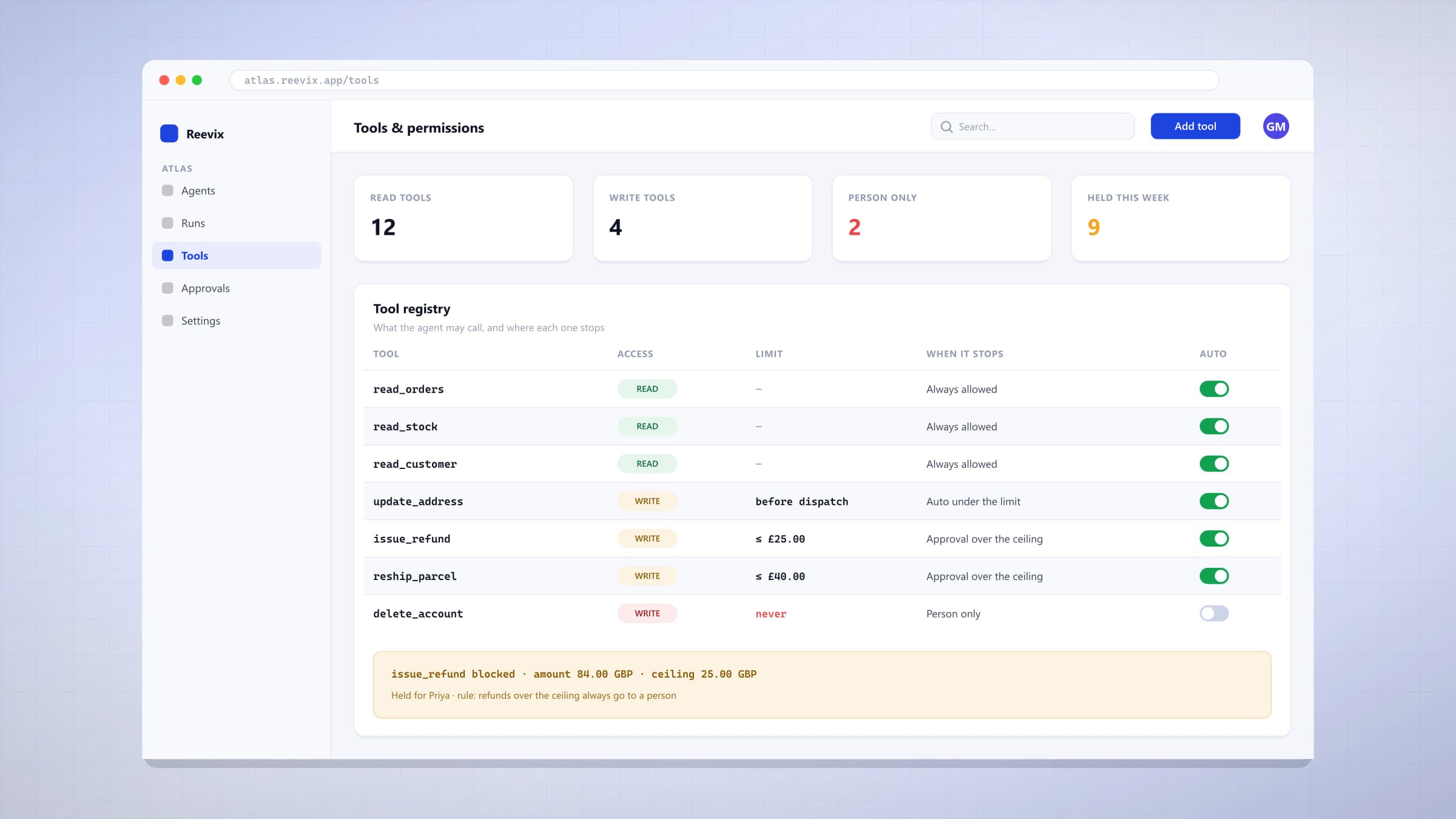
Three things stay exactly as they were, and pretending otherwise is how these projects fail:
Where to start
Start with the job that has a number attached. If your support queue is dominated by "where is my order", the shopper-facing agent pays for itself in weeks. If half your catalog has no description, the merchandising agent does.
Starting with both is how a six-week project becomes a six-month one.
Agentic commerce is not the store getting smarter. It is two unglamorous jobs finally getting done, every day, whether or not anyone had time.
If you'd rather not build this yourself, that's what our products are for — storefronts, SaaS boilerplates, marketplaces, and support agents, already written and ready for your stack.
Golam Mostafa writes every product in the Reevix catalog, and answers its support. Get every deep-dive and every product with All-Access.