Two founders, one working product, eleven months of runway. Their meeting agent did the hard part well: it joined the call, transcribed it, and produced summaries their design partners genuinely used. What it could not do was take money.
The plan on the whiteboard was four months of plumbing — accounts, teams, subscriptions, an admin panel, and a way to stop a customer from transcribing ten thousand hours on a $29 plan. Four months is a third of the runway, and none of it is the product.
Two-person team · meeting-agent SaaS · Orbit SaaS, deployed to Vercel · 19 days from first commit to first paid invoice.
The problem
They had built the interesting half and stalled at the boring half, which is where most small AI products stall. Not because auth is hard — because auth, plus workspaces, plus invites, plus proration, plus failed-card recovery, plus usage caps, is six weeks of unrewarding work each, and there were two of them.
The specific fear was the last item. Agent cost scales with audio hours and with how many times the summariser goes around, and both vary wildly per customer. A flat plan without a meter behind it is an open tab, and they knew it.
What we did
Orbit went in as the foundation rather than a rewrite. Their agent stayed exactly where it was; Orbit supplied everything around it — sign-in, workspaces, plans, and the credit meter that counts an agent run against a plan allowance.
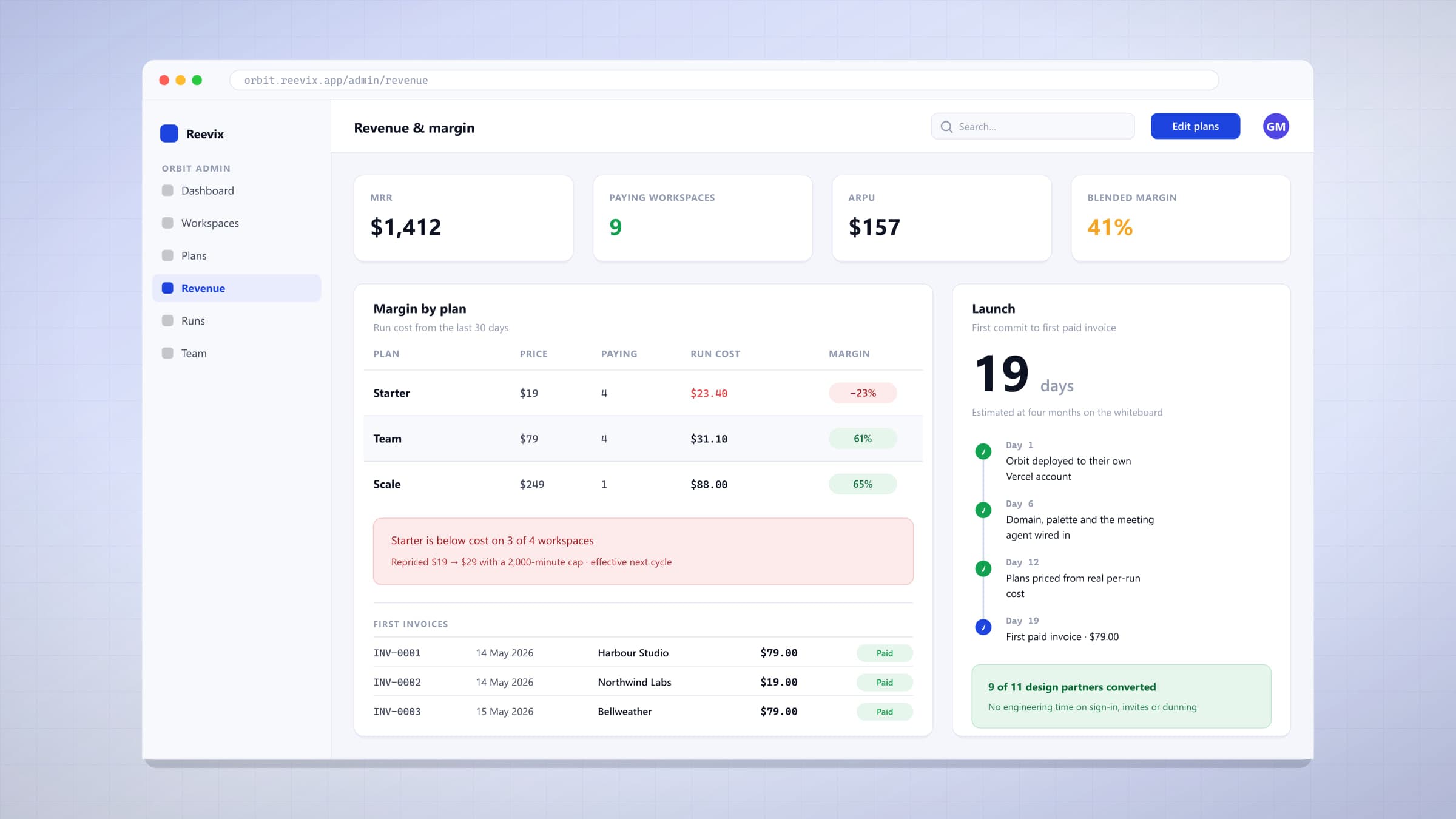
Week one was branding and wiring: their domain, their palette, their service connected behind the credit meter. Week two was plan design, which turned out to be the real conversation. With per-workspace cost visible in the admin panel, the pricing discussion stopped being a guess.
Week three they turned billing on for eleven design partners who had been using it free, and nine of them converted.
The results
We had priced the starter plan on a feeling. The meter told us it lost money on the median customer, not the heavy one. — Co-founder
The pattern
Small teams rarely lose to competitors on features. They lose four months to plumbing and run out of road. Buy the plumbing, keep the runway, and — critically — turn the meter on before you set prices rather than after, while changing them still costs nothing.
Golam Mostafa wrote the code behind these results. Planning something similar? Talk it through first.